The best looper pedals for live vocal performance in 2026 are the ones built with an actual microphone input, not just a 1/4-inch instrument jack borrowed from the guitar pedal world. That single detail separates a genuinely good loop pedal for a singer from one that will leave you hunting for a mixer or a DI box before you can even plug in.
This guide covers 11 real loopers, from budget stompboxes to full performance workstations, and sorts them by the thing that actually matters for a vocalist: can you plug a mic straight into it or not?
Most looper pedal roundups online are written by and for guitarists. That's fine if you play guitar, but if you're a singer who wants to layer harmonies, build a live arrangement out of your own voice, or busk solo with nothing but a mic and a pedal, the priorities are different.
We tested this list against that exact question. Some of these pedals answer it beautifully. A few don't answer it at all without extra gear.
The One Spec That Matters Most for Vocal Looping
Before anything else, check one thing: does the pedal have a genuine microphone input, usually a combo XLR/1/4-inch jack, ideally with switchable phantom power for a condenser mic? A surprising number of popular looper pedals don't.
They were designed for guitarists first, and their single 1/4-inch instrument input expects a guitar-level signal, not a mic-level one. Plug a dynamic mic straight into one of these, and you'll get a painfully quiet, thin signal that needs serious gain just to be usable.
This isn't a minor spec buried in a manual. It's the difference between a pedal you can plug into and start singing through in thirty seconds, and one that needs an audio interface or a small mixer sitting in front of it just to get your voice to a workable level.
Ed Sheeran's own rig, which inspired two of the pedals in this guide, is built entirely around this idea: his loopers are designed to take a mic first, guitar second.
We will organize the rest of this guide around that exact line. First, the pedals with a real mic input built in. Then, the instrument-focused loopers that can still work for vocals, with the extra gear you'd need to make that happen.
Quick Comparison Table
| Pedal | Price | Mic Input | Tracks | Best For |
|---|---|---|---|---|
| Boss RC-600 | $529.99 | 2x XLR w/ phantom | 6 stereo | Serious multi-track vocal looping |
| Boss RC-500 | $351.99 | 1x XLR w/ phantom | 2 | Best value with real mic input |
| Sheeran Looper X | ~$1299 (check price) | 4x XLR/combo w/ phantom | 4 stereo | Full performance workstation |
| Sheeran Looper + | ~$299 (check price) | 1x XLR/combo | 2 | Compact, portable vocal looping |
| NUX NML3DLS | $279.00 | 1x XLR/combo w/ phantom | 2 | Budget-friendly with real mic input |
| Zoom V6-SP | ~$369.99 (check price) | XLR, includes shotgun mic | Looper is secondary | Vocal FX plus basic looping |
| DigiTech Trio+ | $399.99 | None (1/4" guitar only) | Loop + backing band | Guitarists wanting a band |
| Boss RC-5 | ~$219.99 (check price) | None (1/4" only) | 1 | Simple, compact, guitar-first |
| Boss RC-10R | $296.99 | None (1/4" only) | 2 | Deep rhythm library, guitar-first |
| Walrus Audio Xero Polylooper | ~$254.99+ (check price) | None (1/4" stereo only) | 2 independent | Creative instrumental looping |
| MXR Clone Looper | ~$159.99 (check price) | None (1/4" only) | 3 | Budget compact stompbox |
You can check current pricing and availability for every pedal above - Click Here.
True Vocal Loopers: Direct Mic Input Built In
These six pedals were designed with a real microphone input from the ground up. Plug in, set your level, and start looping your voice with no extra gear required.
1. Boss RC-600 (Best for Serious Multi-Track Vocal Looping)
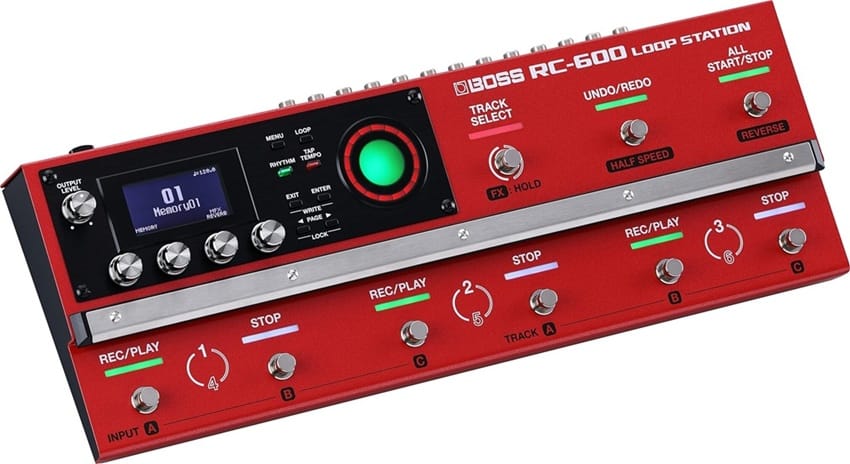
Mic Input: 2x XLR with phantom power (DC 48V)
Tracks: 6 simultaneous stereo phrase tracks
Recording Time: Up to 13 hours total across 99 memories
The RC-600 is Boss's flagship looper, and the spec sheet backs that up: two dedicated XLR mic inputs with phantom power, two stereo instrument inputs, three stereo output pairs, and 49 input effects plus 53 track effects you can layer four at a time. For a singer who wants to build genuinely complex live arrangements, stacking harmonies, ad-libs, and a second vocal texture, the six-track capacity is more headroom than almost anything else in this guide.
We need to be straightforward about something here. A verified Zzounds buyer left a harsh, detailed 0.5-star review describing crashes and a tempo bug that "train wrecks the whole song" during live shows, and said they'd lost confidence in the brand as a result. That's a real, serious complaint from someone who gigged with it.
At the same time, other users report that firmware updates over time have reduced (though not eliminated) some of these issues, and the raw feature set here remains genuinely unmatched at this price. If you go this route, we'd strongly suggest running it through several full rehearsals well before a real show, and keeping your firmware current.
What we love:
- Two genuine XLR mic inputs with phantom power; ready for condenser or dynamic mics
- Six stereo tracks are more than double most other pedals here
- Massive effects library specifically built for vocal processing alongside instruments
Watch out for:
- Verified reports of reliability issues and crashes during live use
- Steep learning curve given the depth of features
- Highest price point in this entire guide
2. Boss RC-500 (Best Value With a Real Mic Input)
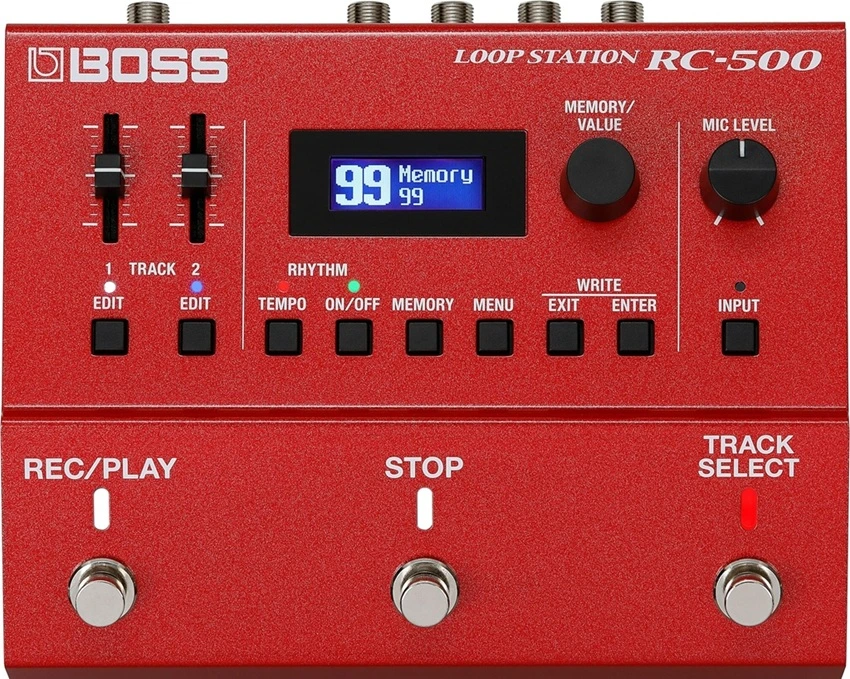
Mic Input: 1x XLR with phantom power (DC 48V)
Tracks: 2
Recording Time: Up to 13 hours total across 99 memories
The RC-500 is where Boss's mic-input looper lineup starts making real financial sense. It includes a dedicated XLR input with switchable phantom power, a separate mic level knob, and independent stereo instrument inputs, all feeding a genuinely capable two-track looper engine with 32-bit AD/DA conversion, 57 rhythm patterns across 16 drum kits, and Loop FX like beat repeat and vinyl flick for live performance flair.
A verified buyer called it "a quality product that simply makes you more musical," specifically praising the 32-bit processing over the 24-bit found in most competitors. That kind of specific, technical praise from an actual owner carries real weight.
What we love:
- Dedicated XLR mic input with phantom power and its own level knob
- 32-bit processing, genuinely higher fidelity than most loopers in this price range
- Runs on 4 AA batteries or an adapter; flexible for busking or stage use
- Strong, specific, verified buyer praise
Watch out for:
- Two tracks are enough for most vocal looping, but singers wanting more layers will want the RC-600
- No onboard rhythm displays as deep as the RC-10R's dedicated rhythm library
If you want the single best balance of price, mic input quality, and real-world reliability in this guide, this is it.
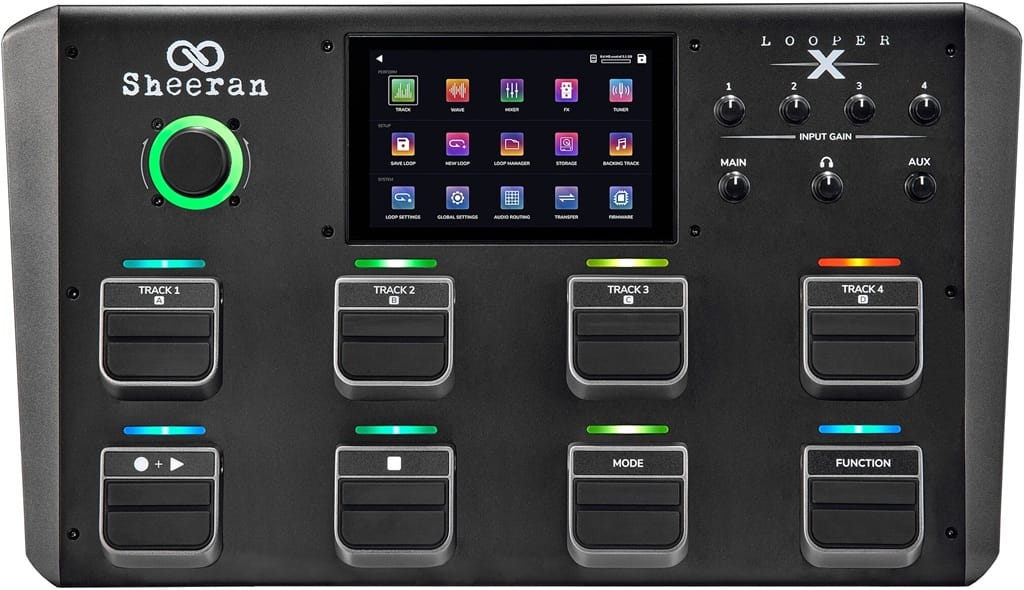
3. Sheeran Loopers Looper X (Best Full Performance Workstation)
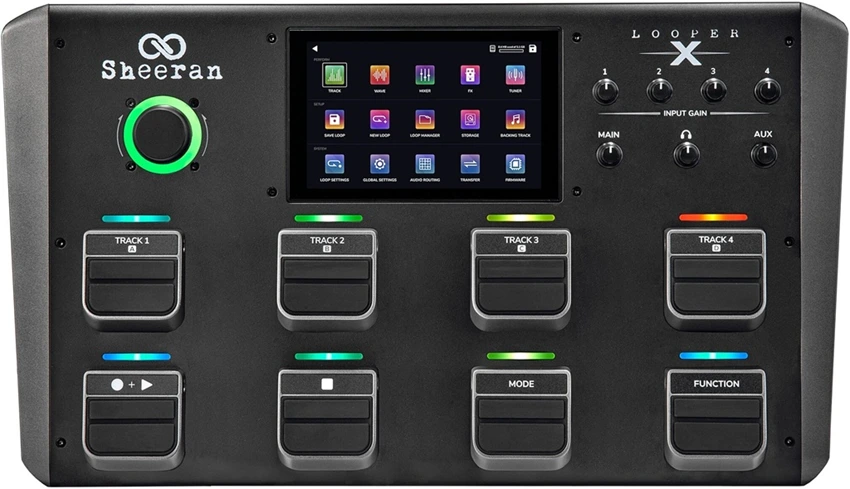
Mic Input: 4x XLR/1/4-inch combo inputs with switchable phantom power
Tracks: 4 simultaneous stereo tracks
Storage: 5.1GB internal, expandable via USB or SD card
Designed by Ed Sheeran and his production team to mirror his actual stadium stage rig, the Looper X is built around the idea that a solo performer, singer or otherwise, needs serious multi-track looping with real mic inputs. Four combo XLR/1/4-inch inputs with phantom power mean you can run a mic and instruments simultaneously, routed through a 7-inch touchscreen with five distinct looping modes (Multi, Sync, Song, Band, and Free) and a HeadRush-powered effects engine with 26 stompbox effects and 9 vocal-specific multi-FX racks.
Here's the honest picture from real owners. A verified Zzounds buyer described serious reliability problems: loops playing back "off time" and stuttering during live use, a plastic panel that broke off after a minor drop, and a frustrating experience trying to get warranty support just after the return window closed.
Separately, a detailed German review argued there's no real reason to pay roughly three times the price of a Boss RC-600 for a pedal whose main advantage is a bigger touchscreen, since it offers less deep customization than Boss's own flagship. Both of those are worth weighing seriously against the genuine appeal of Ed Sheeran's actual looping workflow in a box.
What we love:
- Four combo mic/instrument inputs with phantom power; built for singers first
- Five looping modes cover songwriting, live performance, and pure improvisation
- 9 multi-FX racks specifically designed for vocals
- Can function as a USB audio interface
Watch out for:
- Verified reports of playback timing bugs and build quality concerns
- A detailed independent review questions the value relative to cheaper alternatives with similar power
- Bulky and heavy; some owners find bending down to the touchscreen during a show uncomfortable
4. Sheeran Loopers Looper + (Best Compact, Portable Vocal Looper)
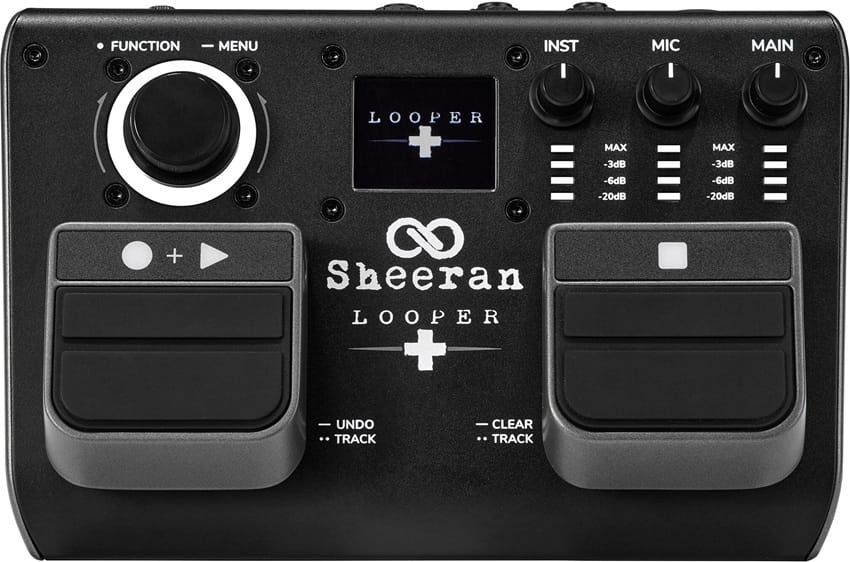
Mic Input: 1x combo XLR/1/4-inch mono input for a dynamic mic
Tracks: 2 (single and dual-track workflows)
Storage: Up to 128 loops, over 3 hours total
The Looper + is the smaller compact looper pedal, that is the more affordable sibling to the Looper X, built around the same die-cast aluminum pedals used on Ed Sheeran's actual stage rig, scaled down into a genuinely portable stompbox. It includes a combo XLR/1/4-inch input specifically built for a standard dynamic microphone, a separate stereo pair of instrument inputs, and a 1.8-inch color display with an RGB loop status ring.
For a singer who wants Sheeran's looping workflow without the Looper X's size, weight, or price, this is the practical entry point. It runs over 6 hours on four AA batteries, which matters for buskers and street performers who don't always have a stage power drop nearby.
What we love:
- Genuine combo XLR input built specifically for a dynamic mic
- Portable and battery-powered; genuinely street-performance friendly
- Same premium pedal build as the flagship Looper X at a fraction of the price
- Plug-and-play USB storage; drag and drop loops without special software
Watch out for:
- Single mono mic input rather than the Looper X's four combo inputs
- Two tracks limits how many layered parts you can build compared to bigger loopers
5. NUX NML3DLS Dual Loop Stereo (Best Budget Pedal With a Real Mic Input)
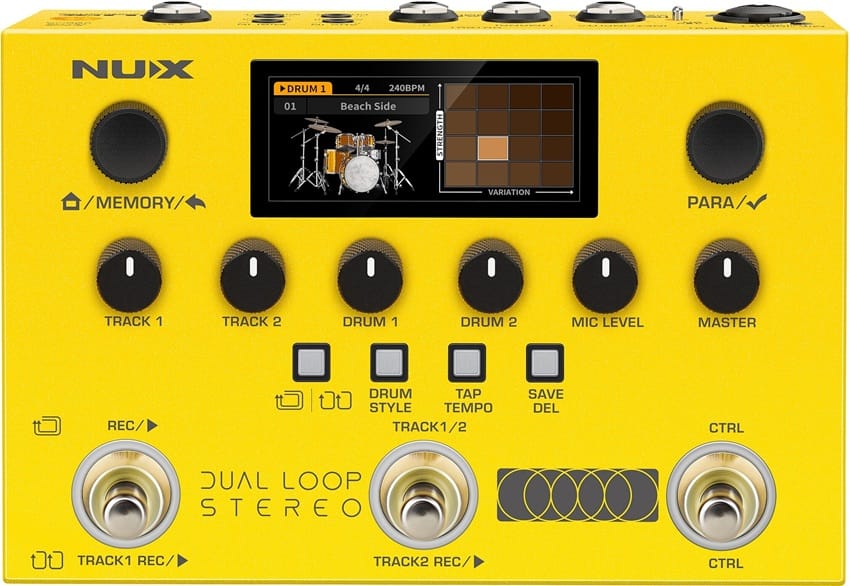
Mic Input: 1x combo XLR/1/4-inch with phantom power (DC 48V)
Tracks: 2
Recording Time: Up to 26 hours total, 90 minutes per track
The NML3DLS stereo looper pedal packs a genuinely surprising amount of vocal-specific thinking into its price point. The combo XLR input includes switchable phantom power for a condenser mic, a dedicated mic level knob, and a specific "A+B Sync" mode described by NUX as ideal for "a song with two instruments or voices, such as a guitar and a microphone." There's also a dedicated GIG mode that strips out the drum machine entirely for a straightforward two-loop vocal performance.
At 26 hours of total stereo recording time and 42 rhythm presets with 672 variations, the raw specs here genuinely compete with pedals costing twice as much. This is a newer listing with no verified buyer reviews yet on Zzounds, so there's no track record of real-world feedback to lean on, which is worth knowing going in.
What we love:
- Genuine XLR mic input with phantom power at a notably lower price than the Boss or Sheeran mic-input options
- GIG mode specifically designed for vocal-only performance without drums
- Massive 26-hour total recording capacity
- 2.86-inch color display for easy at-a-glance operation
Watch out for:
- No buyer reviews yet on this specific listing; you're an early adopter
- Two tracks cap how many independent layers you can build at once
6. Zoom V6-SP (Best Vocal Effects Processor With a Built-In Looper)
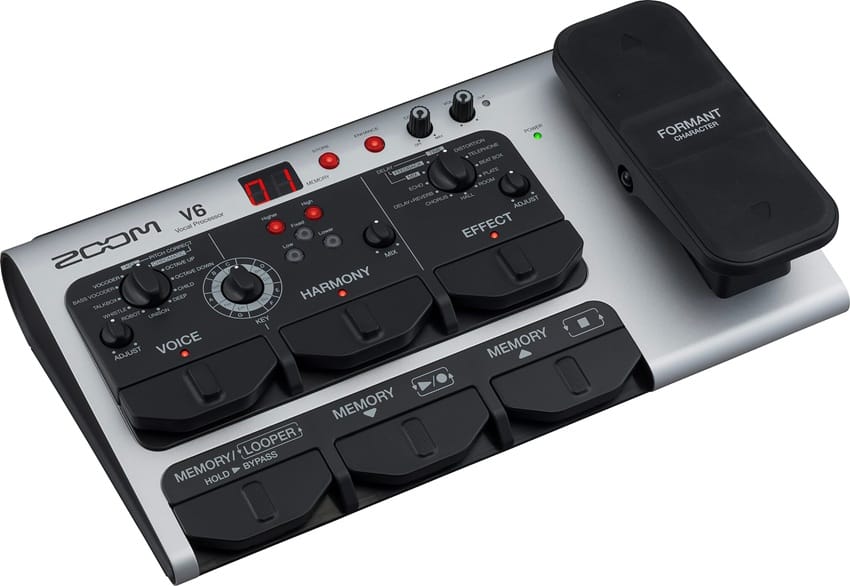
Mic Input: XLR, includes Zoom's SGV-6 shotgun mic
Looper: Up to 3 minutes 30 seconds
Effects: Over 10 studio-grade vocal effects, 40 preset patches
The V6-SP is worth including here with a clear caveat: it's a vocal effects processor first, and a looper second. If your priority is layering loops for minutes at a time, this isn't the deepest option in this guide. But if you want harmonies, pitch correction, reverb, and a unique Formant Shift expression pedal alongside a genuinely useful 3:30 looper, it does something none of the dedicated loopers here can.
The included SGV-6 microphone is a real differentiator. It's a highly directional shotgun-style mic specifically built to isolate your voice from other instruments and stage noise, which matters a lot if you're performing with a full band and don't want your looper's mic input picking up the drummer.
What we love:
- Includes a purpose-built directional mic designed to reject stage bleed
- Formant Shift pedal is a genuinely unique creative tool, not found on other loopers here
- Doubles as a USB audio interface for recording
- Built-in compressor and enhancer optimize your vocal signal automatically
Watch out for:
- 3:30 looper is far shorter than the dedicated loopers in this guide
- This is fundamentally a vocal FX unit that loops, not a looper that processes vocals
- Best suited to singers who want processing and looping in one box rather than serious multi-track work
Instrument Loopers You Can Still Use for Vocals
These five pedals don't have a mic input. They expect a 1/4-inch instrument-level signal. That doesn't rule them out for singers, but it does mean you'll need one extra piece of gear to get your voice into them properly.
7. DigiTech Trio+ (Best for Guitarists Who Also Want a Backing Band)
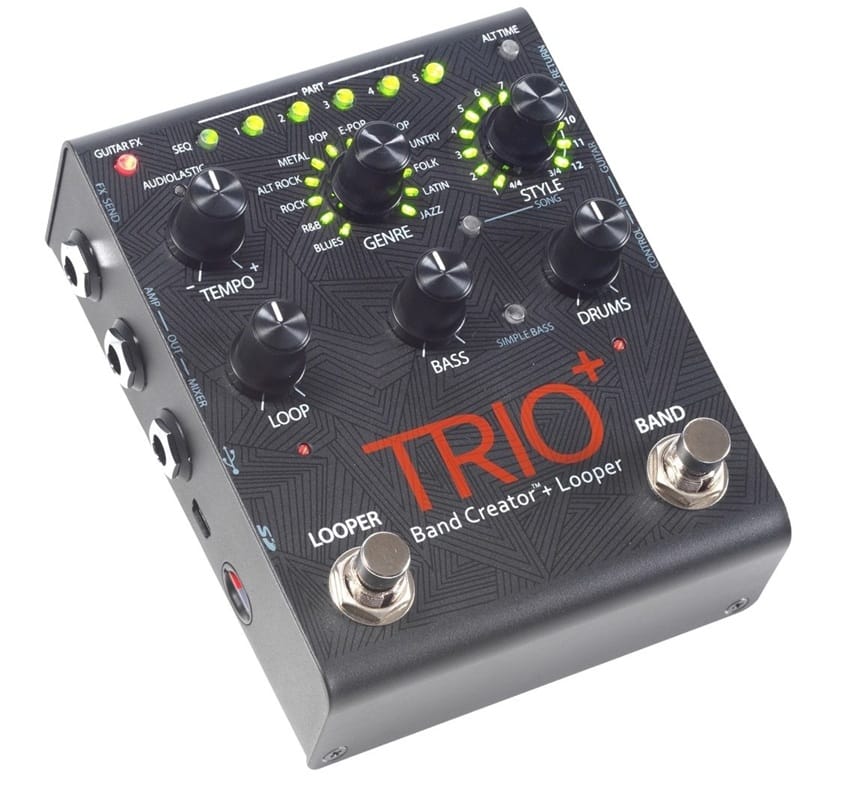
Input: 1/4-inch guitar input only, no mic input
Best for: Singer-guitarists who want automatic bass and drum accompaniment
The Trio+ is a genuinely different kind of pedal than the rest of this list. Beyond its built-in looper with unlimited overdubs, it listens to your guitar playing and automatically generates matching bass and drum accompaniment across 12 genres and 80-plus style combinations. A verified buyer with 50 years of playing experience called it "the perfect answer for a one man band," specifically praising how the looper stacks cleanly alongside the auto-generated rhythm section.
For a singer-songwriter who plays guitar and wants an instant backing band plus a looper in one pedal, this is a genuinely unique option. It's just not built to accept a microphone directly.
8. Boss RC-5 (Best Simple, Compact Looper for Guitarists)
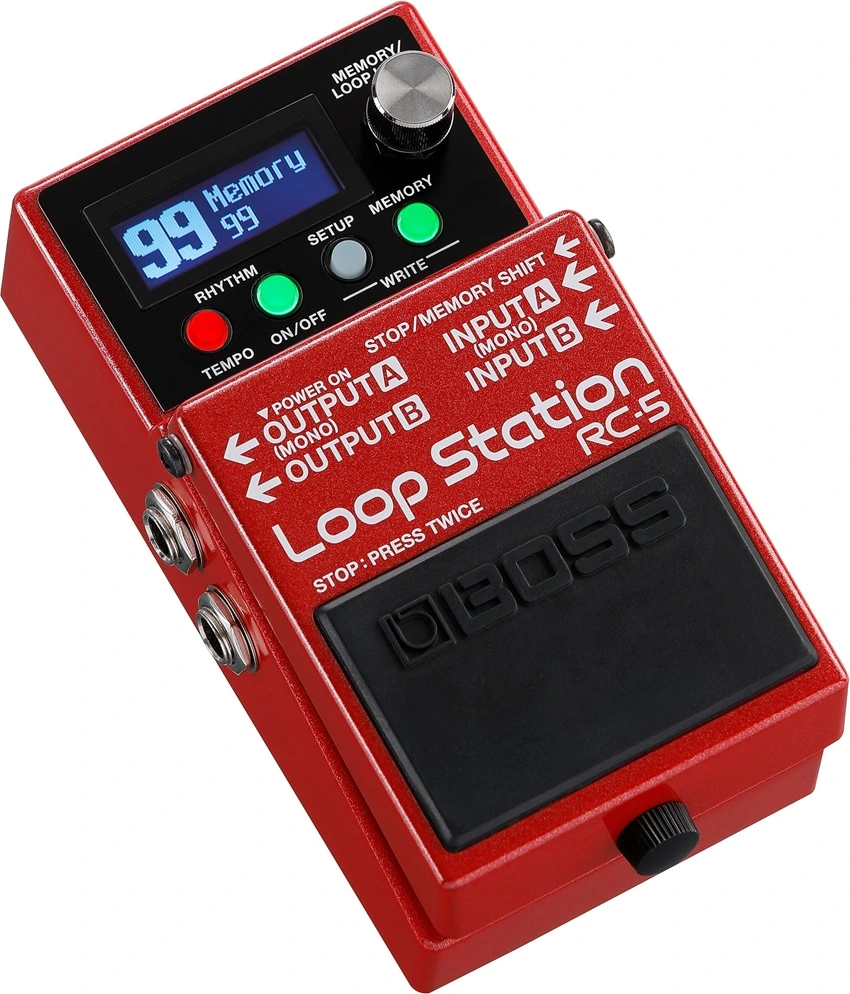
Input: 1/4-inch instrument input only, no mic input
Tracks: 1
Recording Time: Up to 13 hours total
The RC-5 is the compact, single-track entry point into Boss's Loop Station family, sharing the same 32-bit processing engine as its bigger siblings, the RC-500 and RC-600, just without the mic input, second track, or deeper control options. It's genuinely simple to use, with a single memory/loop level knob and straightforward rhythm controls.
What we love:
- Same premium 32-bit sound quality as pricier Boss loopers
- Compact stompbox size fits any pedalboard
- Straightforward, minimal learning curve
Watch out for:
- No mic input at all; instrument-level signal only
- Single track limits layering compared to the RC-500 or RC-600
9. Boss RC-10R (Best for Deep Rhythm Variety, Guitar-First)
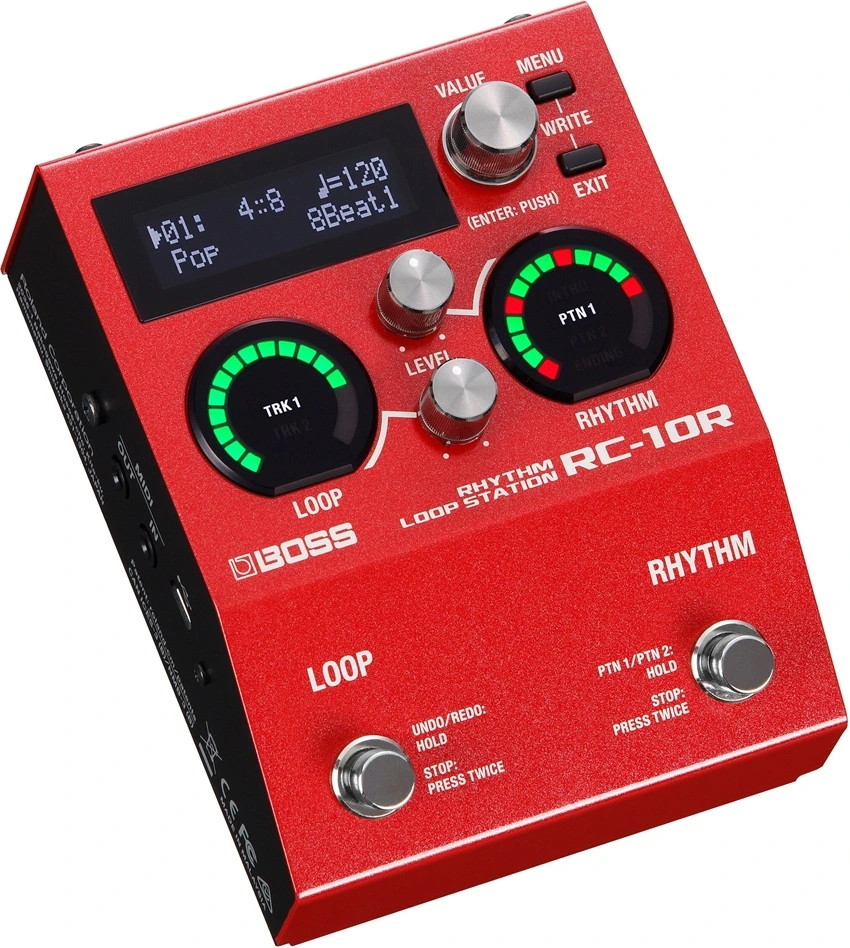
Input: 1/4-inch instrument input only, no mic input
Tracks: 2
Rhythm Library: Over 280 preset styles across 16 drum kits
The RC-10R's real strength is its rhythm engine: 280-plus preset styles, each with complete song structures including intro, pattern, fill, and ending sections, synced tightly to a two-track serial loop engine. For a guitarist who wants a looper that feels like playing along with a real song arrangement rather than a static drum loop, this is a genuinely strong option.
Worth knowing before you buy: a verified buyer described syncing bugs between the loop and rhythm engines that made the pedal "impossible to use" for their purposes, and specifically noted that older Boss looper bugs from previous models have gone unfixed for years. That's a serious claim worth weighing against the otherwise strong rhythm feature set.
What we love:
- Deep, structured rhythm library unlike anything else in this guide
- Two tracks with independent song sections
Watch out for:
- No mic input; 1/4-inch instrument level only
- At least one verified report of rhythm-sync bugs
10. Walrus Audio Xero Polylooper (Best for Creative Instrumental Layering)
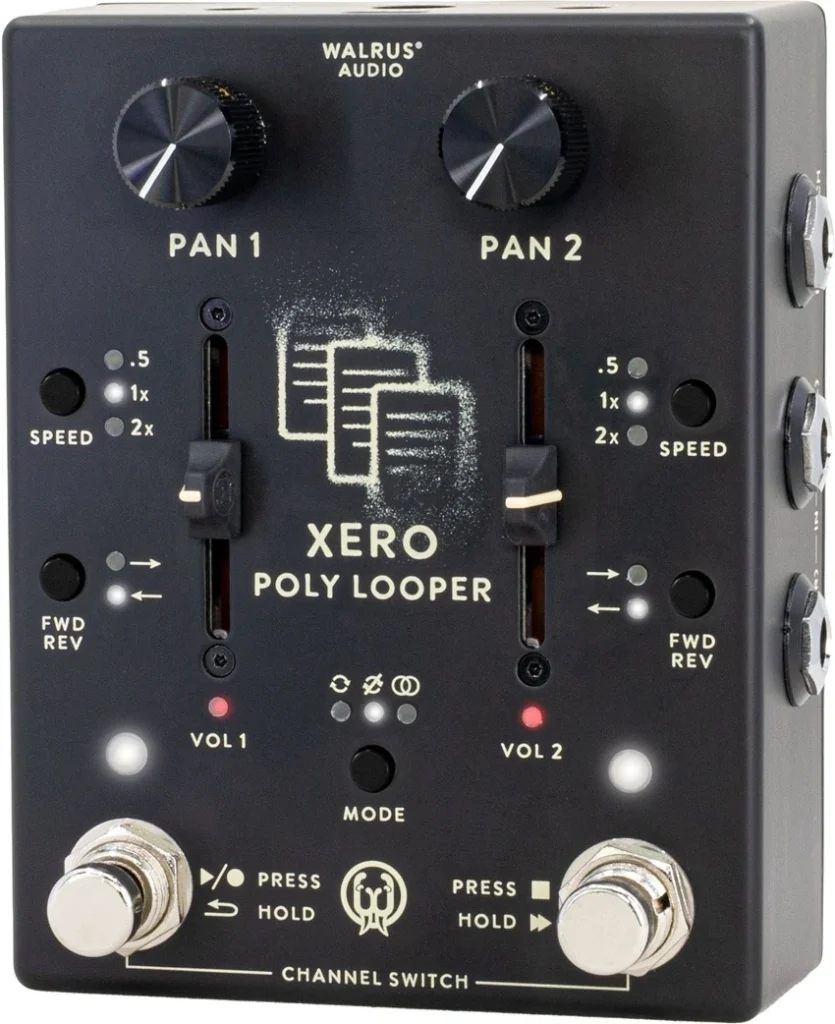
Input: 1/4-inch stereo instrument inputs only, no mic input
Tracks: 2 fully independent channels, 3 minutes each
The Xero Polylooper takes a different approach than the rest of this guide: true bypass, dual independent loop channels each with their own volume, pan, and 0.5x/1x/2x playback speed control, plus reverse playback and near-infinite overdub stacking per channel. It's built for guitarists, bassists, and keyboardists who want a creative sound-design tool as much as a straightforward looper.
What we love:
- Two fully independent channels with individual pan and speed control
- Reverse playback and variable speed open up genuinely creative sound design
- True bypass keeps your signal clean when the looper is off
Watch out for:
- No mic input; built for instrument-level signals
- The 3-minute-per-channel cap is shorter than several other pedals here
11. MXR Clone Looper (Best Budget Compact Stompbox)
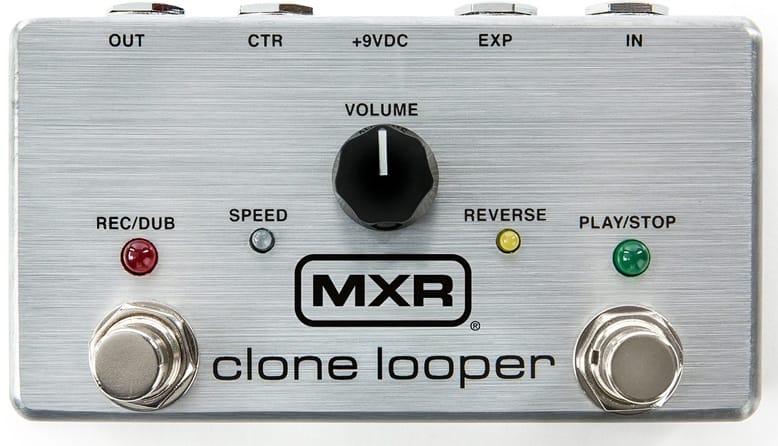
Input: 1/4-inch instrument input only, no mic input
Tracks: 3 loop tracks
Recording Time: Up to 6 minutes at 88.2kHz, 24-bit
MXR's first looper pedal turns a standard-width enclosure sideways to fit a footswitch at each end, with a clever volume knob that doubles as a multi-function switch. It offers up to 6 minutes of high-fidelity stereo recording across 3 loop tracks, time stretch, and a clear LCD screen.
Real user feedback flags a genuine usability quirk: clearing loop layers silently requires holding a footswitch for several seconds, longer than most players want mid-performance, and the pedal reportedly draws enough current (225mA) to cause noise issues on some shared power supplies, so a dedicated power source is worth budgeting for.
What we love:
- High-fidelity 24-bit, 88.2kHz recording quality
- Compact footprint with dual footswitches
- Genuinely affordable entry point into MXR's build quality
Watch out for:
- No mic input; instrument-level only
- Clearing loops takes longer than some players want live
- Benefits from a dedicated power supply rather than a shared one
How to Use an Instrument-Only Looper With Your Voice
If one of the five instrument-only loopers above is otherwise the right fit for you, don't rule it out. You just need one extra piece of gear between your mic and the pedal:
1. A small mixer or audio interface with a mic preamp. This boosts your microphone's signal up to instrument or line level before it reaches the looper's 1/4-inch input. See our Best Audio Interfaces for Home Vocal Recording guide for options that work well in this role, even outside a studio setting.
2. A dedicated DI box or preamp pedal. Several compact preamp pedals exist specifically to solve this exact problem for singers who want to use guitar-focused gear.
3. The right microphone for the job. A quality dynamic mic paired with a decent preamp will get you further than a cheap mic paired with an expensive looper. Our Best Dynamic Microphones for Singers guide covers picks that hold up well in this kind of chain.
This workaround adds a step, but it also means you're not locked out of genuinely excellent pedals like the RC-10R's rhythm library or the Xero Polylooper's creative controls just because they weren't built mic-first.
Which Looper Fits Your Situation?
You're a solo singer who wants the simplest possible setup: The Boss RC-500 or NUX NML3DLS give you a real mic input, phantom power, and a straightforward two-track workflow without breaking the bank.
You want the deepest, most powerful vocal looping rig available: The Boss RC-600 or Sheeran Looper X, understanding the real reliability tradeoffs reported by verified owners of both.
You busk or perform street shows: The Sheeran Looper + or a battery-powered setup built around the NUX NML3DLS both travel well.
You're a singer-songwriter who also plays guitar and wants an instant backing band: The DigiTech Trio+ is a genuinely different tool worth considering alongside a dedicated looper.
You mainly play guitar but want to loop for vocals occasionally: Any of the instrument-only pedals paired with an audio interface will get you there; the Boss RC-10R offers the deepest rhythm library of the group.
You want vocal effects and a basic looper in one unit: The Zoom V6-SP is the only pedal in this guide built around that combination specifically.
Whatever pedal you land on, remember that a looper only captures what you put into it. Solid technique matters more than gear here. Our guide to the best online singing lessons breaks down structured coaching that will make everything you loop sound better before a single pedal gets involved.
Frequently Asked Questions
What is the best looper pedal for singers specifically?
The Boss RC-500 offers the strongest combination of a genuine XLR mic input with phantom power, real-world reliability based on verified buyer feedback, and a reasonable price. For singers who want maximum power and don't mind a steeper learning curve, the Boss RC-600 or Sheeran Looper X offer more tracks and effects, with tradeoffs in reported reliability.
Do I need a looper pedal with an XLR input if I'm a singer?
It makes things dramatically simpler. Loopers built around a 1/4-inch instrument input expect a much hotter signal than a microphone produces, so plugging a mic straight in usually results in a weak, noisy signal. An XLR mic input, ideally with phantom power for condenser mics, solves this without extra gear.
Can I use a guitar looper pedal for vocals?
Yes, with an audio interface, small mixer, or DI box between your microphone and the pedal to bring the signal up to instrument level. It's an extra step, but it opens up pedals like the Boss RC-10R or Walrus Audio Xero Polylooper that offer genuinely strong feature sets built primarily for instrumentalists.
What's the difference between the Sheeran Looper X and Looper +?
The Looper X is a full-performance workstation with a 7-inch touchscreen, four combo mic/instrument inputs, and four simultaneous stereo tracks. The Looper + is a smaller, more affordable stompbox with a single combo mic input and two-track looping, built for portability over maximum power.
Is a more expensive looper pedal always better for vocal performance?
Not necessarily. Our research turned up serious verified reliability complaints on two of the priciest options in this guide, the Boss RC-600 and Sheeran Looper X, while the mid-priced Boss RC-500 had a strongly positive verified review specifically praising its build quality and sound. Price and track record don't always move together in this category.
How much looping time do I actually need as a singer?
For most live vocal performances, two tracks and under an hour of total recording time is more than enough, since you're typically looping short phrases repeatedly rather than recording long-form material. The multi-hour capacities on pedals like the RC-600 or NML3DLS matter more if you're saving many different songs across memory slots for a full setlist.
Final Picks
Best looper pedals for live vocal performance, by category:
- Best Overall for Vocal Looping: Boss RC-500
- Best Budget Option With a Real Mic Input: NUX NML3DLS
- Best Maximum-Power Option: Boss RC-600
- Best Full Performance Workstation: Sheeran Looper X
- Best Portable Vocal Looper: Sheeran Looper +
- Best Vocal FX Plus Looper Combo: Zoom V6-SP
- Best for Guitarists Who Also Sing: DigiTech Trio+
- Best Simple Instrument-Only Looper: Boss RC-5
- Best Rhythm Library, Guitar-First: Boss RC-10R
- Best for Creative Instrumental Layering: Walrus Audio Xero Polylooper
- Best Budget Compact Stompbox: MXR Clone Looper
The right looper depends entirely on whether your voice is the main event or one part of a bigger rig. Check the mic input first. Everything else is a matter of budget, track count, and how much complexity you actually want to manage on a stage in the middle of a set.
To build out the rest of your live and recording setup, our guides to the Best In-Ear Monitors for Singers, Best Headphones for Singers Recording, and Best Pop Filters and Mic Accessories for Singers round out the gear side. And once you're recording what you loop, our Best DAWs for Recording Vocals guide covers the software you'll use to capture and edit it.
For the complete picture on every piece of gear a singer needs, visit our Singing Equipment Reviews pillar guide.