The best pop filters and mic accessories for singers are the Stedman Proscreen XL V2 for serious home studios, the On-Stage ASVS6GB for a reliable budget pick, the On-Stage MY410 shock mount for isolating a condenser mic from vibration, and either the On-Stage 7701 tripod stand or the Rode PSA1 desk arm, depending on how your space is set up.
A microphone is only as good as what is holding it up and standing in front of it. This guide covers the small pieces of gear that most singers overlook until a recording gets ruined by a popped P or a rumble from someone walking across the floor.
Most articles about pop filters treat them as an afterthought bolted onto a microphone review. This one treats them as their own category worth understanding properly, because the physics behind why plosives happen is genuinely useful information, not just a sales pitch for a $40 accessory.
We will cover what a plosive actually is, what separates a good pop filter from a bad one, real picks with honest reviews pulled straight from verified buyers, and how to put together a complete accessory kit without overspending.
What a Plosive Actually Is (And Why It Matters)

Linguists call P, B, T, D, K, and G sounds "stop consonants" or "plosives" because your mouth briefly stops the flow of air completely, then releases it in a small burst. Say the word "pop" slowly and put your hand an inch in front of your lips. You will feel two distinct puffs of air hit your palm, one on each P. That burst of air is harmless to your ears, but to a microphone diaphragm sitting a few inches away, it is closer to a small gust of wind than a musical note.
Here is the part most articles skip. Singers get hit by plosives worse than public speakers do, for a specific reason called the proximity effect. When you sing close to a directional microphone (which is most of them, including nearly every dynamic and cardioid condenser mic made for vocals), the bass response of that mic increases the closer your mouth gets to the capsule. This is exactly why singers are taught to work the mic close for warmth and intimacy.
The tradeoff is that the same closeness that makes your low end sound rich also means any plosive blast lands squarely on the diaphragm at full force, and the proximity effect boosts the low-frequency thump of that blast right along with your voice. A pop filter's entire job is to break up that concentrated burst of air into a wider, gentler puff before it reaches the mic, without doing much of anything to the actual sound of your voice traveling through it.
This is also why placement matters more than most singers realize. A pop filter set two to four inches in front of the mic capsule works far better than one jammed right up against the grille, because it needs room to actually disperse the air before it reconverges. Sound On Sound's own technical Q&A on the subject makes a similar point: metal mesh screens tend to outperform basic fabric ones for this reason, and mic positioning slightly off axis helps even more.
What to Look For in a Pop Filter
- Metal versus fabric screen. Fabric (usually nylon stretched over a hoop) is cheaper and works fine for most home use. Metal mesh screens, like the Stedman Proscreen line, redirect airflow downward instead of just diffusing it, which tends to perform better on singers with a strong, forceful attack on their consonants.
- Gooseneck length and flexibility. You want enough reach to position the filter comfortably between you and the mic without it constantly drifting out of place mid-session.
- Clamp compatibility. Check the clamp width against your mic stand or boom arm diameter before buying. A filter that will not physically attach to your stand is not a filter you can use.
- Washability. If you are sharing a mic between multiple vocalists, or you just want good hygiene, metal screens that can be wiped down or washed have a real practical edge over fabric ones that absorb moisture over time.
- Warranty. Stedman backs its Proscreen line with a lifetime warranty, which says something about how confident the company is in the build.
Quick Comparison Table
| Product | Category | Price | Best For |
|---|---|---|---|
| Stedman Proscreen XL V2 | Pop filter | $84.99 | Serious home studios, metal mesh performance |
| On-Stage ASVS6GB | Pop filter | $41.95 | Budget-friendly, reliable everyday use |
| On-Stage MY410 | Shock mount | $36.95 to $42.95 | Isolating a condenser mic from vibration |
| On-Stage 7701 | Tripod/boom stand | $31.95 | Traditional floor-standing setup |
| Rode PSA1 | Desk boom arm | $127.00 | Clean desk setup, podcast-style position |
You can check current pricing and availability for every product above by Clicking Here.
Top Pop Filters for Singers
1. Stedman Proscreen XL V2 (Best for Serious Home Studios)
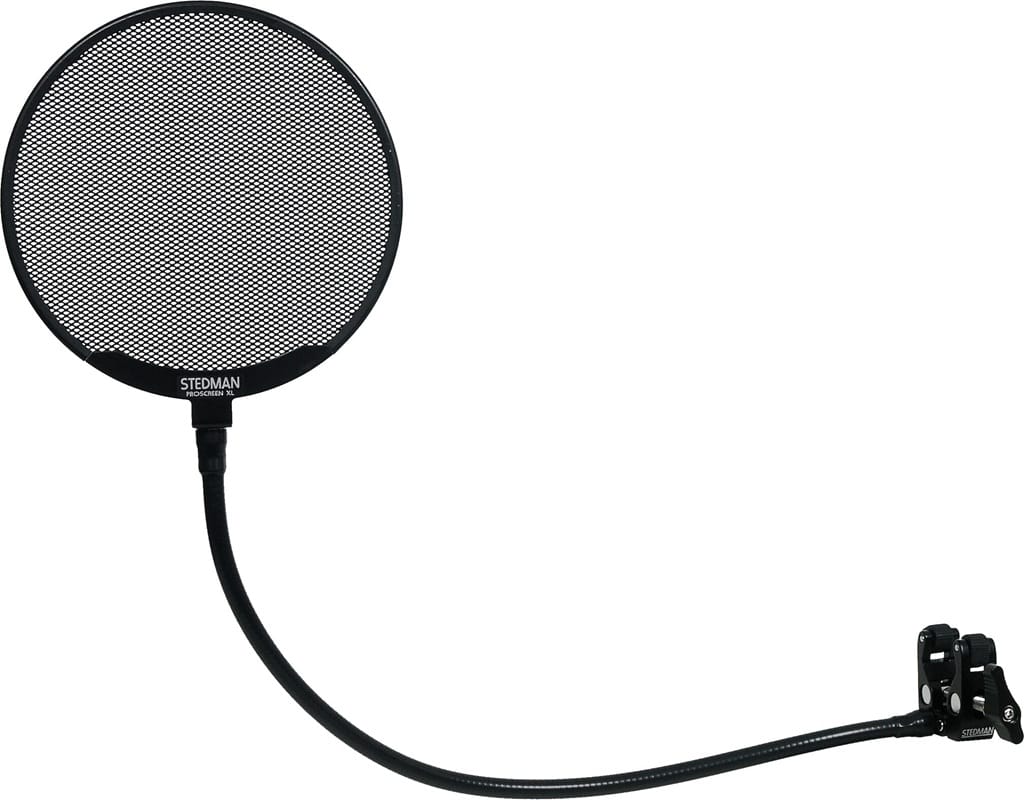
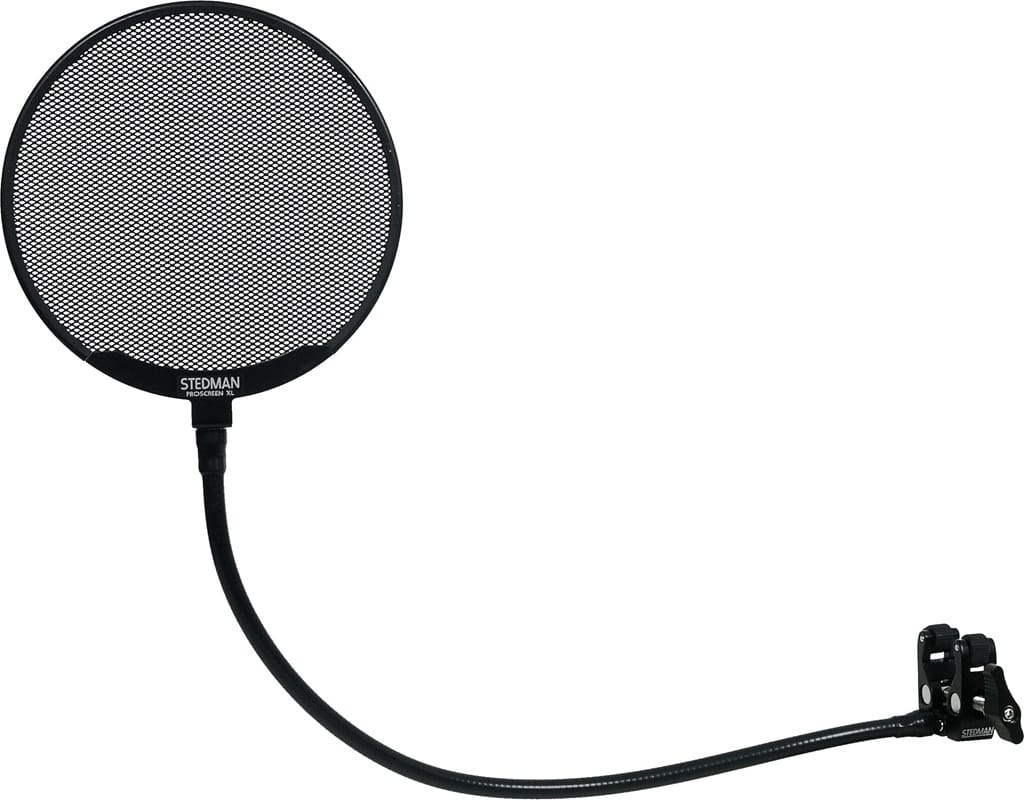
Screen Diameter: 6 inches
Gooseneck Length: 16.5 inches
Filter Material: Metal
Clamp Range: Fits any boom or stand up to 1.5 inches wide
Stedman has been making the Proscreen line for years, and the XL V2 is the current, updated version with a universal clamp that fits round or square booms. Instead of a fabric mesh that just diffuses air, the metal Proscreen material redirects airflow downward away from the capsule, which is a genuinely different mechanism than most budget filters use.
The company backs it with a lifetime warranty, and because it is metal rather than fabric, you can wipe it down or run it through a light wash between sessions without it degrading.
A verified buyer who purchased this in January 2026 summed it up simply: it is expensive, but it filters plosives without muffling the voice, and they called it the best pop filter they had used. That is a real, specific endorsement rather than a generic one, and it lines up with what the metal-versus-fabric difference would predict.
What we love:
- Metal mesh redirects air instead of just diffusing it; noticeably more effective on forceful singers
- Universal clamp fits nearly any boom arm or stand
- Washable screen, useful for hygiene and long-term durability
- Lifetime warranty backs up the premium price
- 16.5 inch gooseneck gives you real flexibility in positioning
Watch out for:
- At $84.99, this is a real step up in price over basic nylon filters
- Metal construction adds a small amount of weight compared to fabric options, so make sure your stand or boom arm can support it without drooping
If you record regularly and plosives have been a recurring problem in your takes, this is the upgrade that actually solves the problem rather than just masking it.
Check the latest price and specs!
2. On-Stage ASVS6GB (Best Budget Pop Filter)
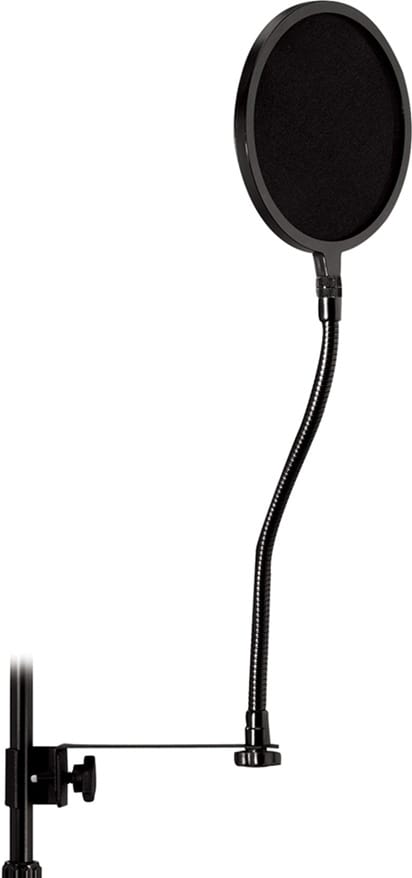
Clamp Reach: 6 inch bar plus 13 inch steel gooseneck
Mounting: Fits stands or booms up to 7/8 inch in diameter
The ASVS6GB is On-Stage's straightforward, no-frills pop filter, and it has racked up 61 verified reviews averaging 4 out of 5 stars, which is a solid track record for a budget accessory. The V-shaped bracket and easy-grip clamp attach to almost any standard mic stand, and the 13-inch gooseneck gives you enough reach to dial in the right distance from your mic.
One long-time verified buyer noted the screen itself does an excellent job cleaning up vocals, but wished the clamp mechanism and screen rim were built from a slightly sturdier material over the long haul. That is a fair, specific critique rather than a dismissal, and it is useful information if you are the type of singer who is rough on gear or plans to travel with it frequently.
What we love:
- Reliable, proven track record across 61 verified reviews
- 13 inch gooseneck offers real flexibility for positioning
- Fits nearly any standard mic stand up to 7/8 inch
- Roughly half the price of the premium metal option
Watch out for:
- The plastic threading on the screen mount is a known long-term wear point, according to verified buyers
- Fabric mesh does not perform quite as well as metal on very forceful, close-up vocal takes
For most home singers who just need a dependable pop filter without spending $85, this is the practical choice.
Check the latest price and specs!
Shock Mounts: The Accessory Most Singers Skip
A shock mount is a suspension cradle that holds your microphone using elastic or spring tension instead of a rigid clip. Its job is to isolate the mic capsule from vibrations traveling up through the stand itself, footsteps, a bumped desk, the low rumble of an HVAC system, or even the mechanical noise of you shifting your weight while you sing.
Singers using a condenser microphone for home recording benefit from this more than almost anyone else, since condensers have much more sensitive diaphragms than the dynamic mics typically used on stage.
On-Stage MY410 (Best Shock Mount for Large-Diaphragm Condensers)
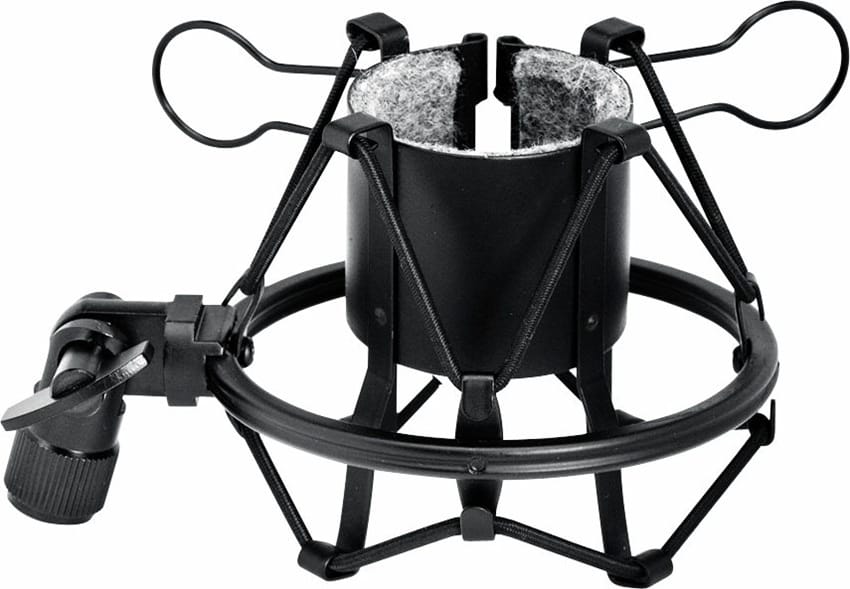
Compatible Microphone Diameter: 42 to 48mm
Mounting Thread: 5/8 inch, 27 threads
The MY410 is a die-cast steel adapter with a cloth-lined clamp designed to hold large-diaphragm condenser microphones securely while decoupling them from stand-borne vibration. It angles and locks into position with a simple locking knob, and it will attach to any standard mic boom.
Here is something worth knowing before you buy any shock mount, not just this one. A verified buyer gave this a fair but honest 3 out of 5 stars after finding it would not open wide enough for their 2-inch diameter AKG condenser mic, since the MY410 is built specifically for the 42 to 48mm range. Their advice was blunt and genuinely useful: measure your microphone's actual diameter before ordering any shock mount, because "universal" often means universal within a specific size range, not truly universal across every mic on the market.
What we love:
- Solid die-cast steel construction for the price point
- Cloth-lined clamp protects your microphone's finish
- Simple angle adjustment with a locking knob
- Affordable way to add real vibration isolation to a condenser setup
Watch out for:
- Only fits mics in the 42 to 48mm diameter range; verify your specific microphone's spec sheet first
- One verified buyer found the spring handles a little stiff to operate when fitting thicker mics
Pair this with a quality large-diaphragm condenser from our Best Microphones for Singers guide (many of which include condenser options alongside the dynamic picks), and you have a genuinely quieter signal chain feeding into your interface.
Check the latest price and specs!
Mic Stands and Boom Arms
The right stand depends entirely on your setup. A traditional tripod boom stand works well if you are standing to sing or need to move the mic around a room. A desk-mounted boom arm is the better call if you are recording seated at a computer and want to reclaim floor space.
On-Stage 7701 Tripod/Boom Microphone Stand (Best Traditional Floor Stand)
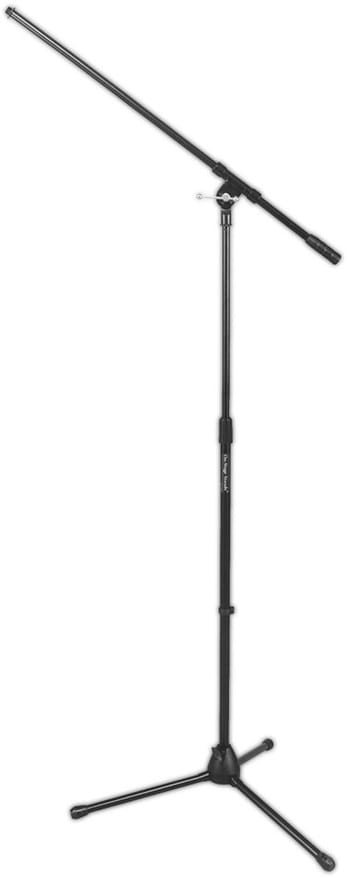
Adjustable Height: 36 to 63 inches
Boom Length: 30 inches
Base Spread: 23 inches
The 7701 is a classic tripod boom stand with a 30-inch adjustable boom arm and a folding tripod base, sold individually or in multi-packs for singers who need to outfit a whole room. It has been reviewed 83 times with an average of 2.5 out of 5 stars, and in the spirit of being straightforward with you, that number reflects real, specific complaints rather than a fluke.
One verified buyer described it as feature-filled but not road-worthy, specifically flagging that the boom clutch does not always stay tight, allowing the boom to rotate under the weight of a heavier microphone. If you are using a lightweight dynamic mic and setting this up in a home studio where it will not get bumped or transported often, it will likely serve you fine, and the price is hard to beat.
If you are hauling gear to gigs regularly or mounting a heavier condenser and shock mount combo on the boom, budget for the possibility that you may need to tighten it more often than you would like, or consider a sturdier stand.
What we love:
- Affordable, especially in multi-packs for outfitting a full studio or rehearsal space
- 30 inch boom gives real reach and flexibility
- Foldable tripod legs make storage and transport simple
Watch out for:
- Verified buyers report the boom clutch can loosen under heavier mic and accessory combinations
- Best suited to lighter dynamic mics rather than a condenser, plus shock mount, plus pop filter stack
Check the latest price and specs!
Rode PSA1 Swivel Studio Arm (Best Desk-Mounted Boom Arm)
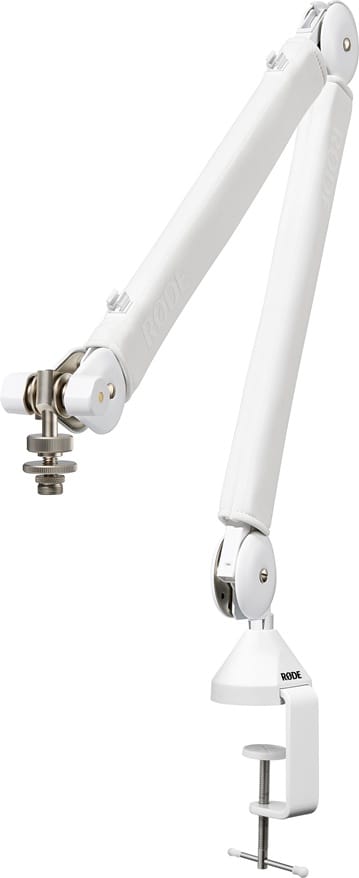
Horizontal Reach: 32.5 inches
Vertical Reach: 33 inches
Load Capacity: 1.5 to 2.4 lbs (0.7 to 1.1 kg)
Mounting: Desk clamp or screw-mount, both included
The PSA1 is a parallelogram-style desk boom arm built around an internal spring mechanism, which means it holds its position quietly and moves smoothly when you reposition your mic. It rotates a full 360 degrees and includes both a desk clamp and a screw-mount option, so it works whether or not you want to put a permanent hole in your desk.
There is a genuinely useful piece of information buried in the verified reviews here. A buyer who contacted Rode directly with a pre-sales question got a straight answer from the company: the PSA1 is specifically balanced and designed around the weight of the Rode Podcaster microphone.
If you are mounting a different, heavier mic and shock mount combination on it, the balance may feel off, and the arm may not glide as smoothly as advertised. That is not a knock on the product; it is simply useful context that most listings will not tell you upfront.
What we love:
- Smooth, quiet internal spring mechanism
- Two mounting options are included in the box
- Full 360-degree rotation for flexible positioning
- Frees up desk space compared to a traditional tripod stand
Watch out for:
- Designed and balanced specifically around lighter mics like the Rode Podcaster; heavier mic and shock mount combinations may not glide as evenly
- Reach may not clear a tall monitor on a crowded desk setup, according to at least one verified reviewer
Check the latest price and specs!
Building a Complete Accessory Kit on a Budget
Here is how these pieces fit together, depending on what you are building.
Bedroom setup on a budget (under $80 total): The On-Stage ASVS6GB pop filter paired with whatever stand came with your microphone, or a basic On-Stage tripod stand. This gets plosives under control without much investment.
Serious home studio (around $150 to $200): The Stedman Proscreen XL V2 pop filter, the On-Stage MY410 shock mount for a condenser mic, and either the 7701 tripod stand or the Rode PSA1 desk arm, depending on your space. This is a genuinely capable accessory setup that will serve most singers for years.
Desk-based podcast or content creator setup: Skip the floor stand entirely and go with the Rode PSA1, paired with either pop filter, depending on budget. This keeps your desk clear and your mic positioned consistently, take after take.
Whatever combination you land on, remember that these accessories only matter once you have the right microphone and the right software chain behind them. Our guides to the Best Dynamic Microphones for Singers and Best Audio Interfaces for Home Vocal Recording cover the two most important pieces of that chain. Once your signal is captured cleanly, the Best DAWs for Recording Vocals guide walks through the software you will be editing and comping your takes in.
Frequently Asked Questions
Do I really need a pop filter to record vocals?
Yes, if you are recording with a directional microphone at a normal singing distance. Plosive consonants like P, B, and T create a burst of air that can distort or thump on the recording, and the proximity effect that gives your voice a warm, close sound also amplifies that thump. A pop filter breaks up the air blast before it reaches the microphone diaphragm.
What is the difference between a pop filter and a shock mount?
A pop filter sits in front of the microphone and blocks air blasts caused by your voice. A shock mount holds the microphone itself and isolates it from vibrations traveling through the stand, such as footsteps or a bumped desk. Most serious home setups benefit from both, since they solve two completely different problems.
Is a metal pop filter actually better than a fabric one?
For singers with a strong, forceful attack on consonants, yes, generally. Metal mesh filters like the Stedman Proscreen redirect airflow downward rather than simply diffusing it, which tends to handle stronger plosive blasts more consistently. Fabric filters are lighter, cheaper, and perform well for most casual home use.
How do I know if a shock mount will fit my microphone?
Check your microphone's diameter in millimeters against the shock mount's compatible range before ordering. The On-Stage MY410, for example, fits mics between 42 and 48mm. A shock mount rated for a different size range will not close around a mic that is too large, or will not hold one securely that is too small.
Should I get a floor stand or a desk boom arm?
It depends on your recording space. A traditional tripod stand, like the On-Stage 7701, works well if you sing standing up or need to move the mic between different spots in a room. A desk-mounted arm like the Rode PSA1 is the better choice if you record seated at a computer and want to keep your desk surface clear.
How far should the pop filter be from my microphone?
Most engineers find that two to four inches between the pop filter and the mic capsule works best. Too close, and the filter cannot properly disperse the air blast before it reconverges near the diaphragm. Too far and you lose some of the protective effect entirely.
Final Picks
Best pop filters and mic accessories for singers, by category:
- Best Premium Pop Filter: Stedman Proscreen XL V2
- Best Budget Pop Filter: On-Stage ASVS6GB
- Best Shock Mount: On-Stage MY410
- Best Traditional Floor Stand: On-Stage 7701
- Best Desk Boom Arm: Rode PSA1
None of these accessories will make you a better singer, but they will make sure the recording actually captures what you are doing right. A great take ruined by a popped P or a rumble from the next room over is a genuinely frustrating, avoidable problem. Get the fundamentals of your signal chain solid first with the right microphone and audio interface, then round it out with the accessories in this guide. And if you are also building out your monitoring setup for practice or live performance, our Best In-Ear Monitors for Singers and Best Headphones for Singers Recording guides cover that side of things in full.
For the complete picture on every piece of gear a singer needs, from microphones to monitors to software, visit our Singing Equipment Reviews guide.