The Shure SM58 and Beta 87A are not really two versions of the same microphone, and the honest answer to which one you should buy comes down to a bigger question than budget: do you want a dynamic mic or a condenser? The SM58 is dynamic, costs $109.00, and requires no power at all. The Beta 87A is a condenser mic; it costs $289.00, and requires phantom power to work.
That's a fundamentally different piece of technology, not just a step up in the same product line, and it changes almost everything about how each mic behaves in your hands.
This is a bigger comparison than SM58 versus Beta 58A, where both mics are dynamic, and the differences come down to output and pattern. Here, we're comparing two entirely different ways of turning sound into an electrical signal. We pulled real specs, real verified buyer reviews, and the genuine engineering reasons Shure built the Beta 87A the way they did, including why a condenser mic that's normally considered too delicate for the road became one of Shure's most trusted live vocal microphones.
Quick Comparison Table
| Spec | Shure SM58 | Shure Beta 87A |
|---|---|---|
| Price | $109.00 | $289.00 |
| Microphone Type | Dynamic | Condenser (electret bias) |
| Polar Pattern | Cardioid | Supercardioid |
| Frequency Response | 50 Hz to 15,000 Hz | 50 Hz to 20,000 Hz |
| Max SPL | Not specified by Shure | 142 dB (0.25% THD) |
| Phantom Power Required | No | Yes, 11 to 52 Vdc |
| Weight | Approx. 298g | 200g |
| Built-In Pop Filter | Yes, spherical | Yes, 3-stage |
| Finish | Black body | Blue Metallic aluminum |
| Best For | Most singers, loud voices, no-power situations | Detailed voices, controlled technique, cutting through a mix |
You can check current pricing and availability for both microphones through Zzounds.
Dynamic vs Condenser: The Difference That Actually Matters
A dynamic microphone, like the SM58, works with a simple moving coil attached to a diaphragm. Sound waves move the diaphragm, the coil moves through a magnetic field, and that motion directly generates a small electrical signal. No external power needed. It's a mechanically simple, extremely rugged design, which is exactly why the SM58 survives being dropped, rained on, and generally abused without complaint.
A condenser microphone, like the Beta 87A, works completely differently. It uses a much lighter, more sensitive diaphragm positioned close to a charged backplate, and the two together form a capacitor. Sound pressure changes the distance between them, which changes the capacitance and generates a signal, but this process requires an external voltage to charge the plates in the first place.
That's what phantom power is for. The tradeoff for that added complexity is a lighter, more responsive diaphragm that captures far more detail, especially in the high frequencies, than a dynamic capsule can.
This is why the Beta 87A's frequency response extends to 20,000 Hz while the SM58 stops at 15,000 Hz. It's not a tuning choice; it's a consequence of the underlying technology. Condensers pick up more of the actual sound happening in front of them, for better and for worse.
Shure SM58: Overview and Real Reviews
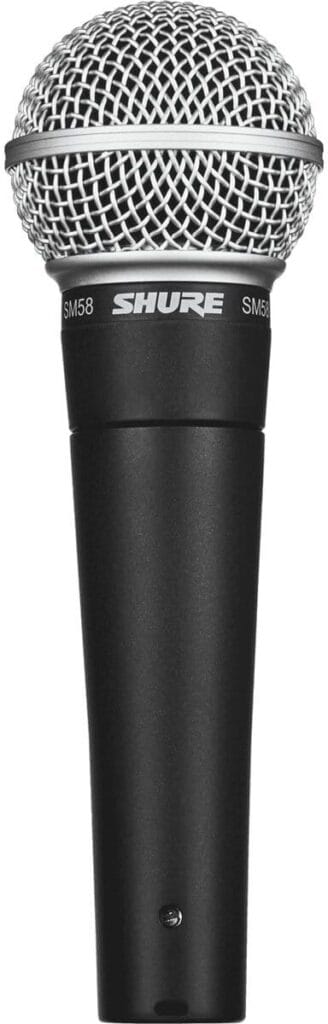
Price: $109.00
Type: Dynamic
Pattern: Cardioid
Frequency Response: 50 Hz to 15,000 Hz
The SM58 has been the default vocal microphone in live sound for more than 40 years. It has a tailored midrange presence boost that flatters most voices, a built-in spherical filter that handles plosives without a separate pop filter, and a cardioid pattern that's forgiving of imprecise mic technique. Because it needs no power source, it works with literally any mixer, interface, or PA system on earth, including cheap ones without a phantom power circuit at all.
Real buyer feedback on Zzounds consistently praises its dependability across decades of live use. It remains the go-to choice for loud, powerful voices and situations where a singer moves around a lot or doesn't hold a textbook-perfect mic position, since its wider cardioid pattern is more forgiving than a tighter pattern would be.
Shure Beta 87A: Overview and Real Reviews
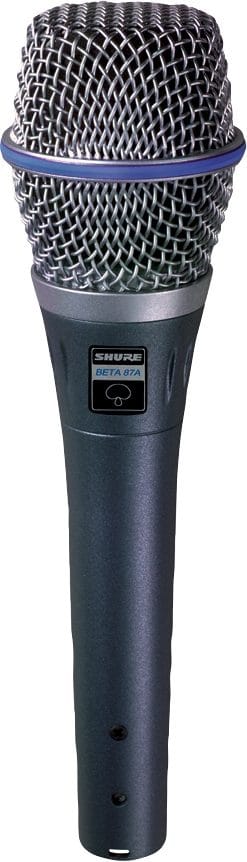
Price: $289.00
Type: Condenser (electret bias)
Pattern: Supercardioid
Frequency Response: 50 Hz to 20,000 Hz
Max SPL: 142 dB
The Beta 87A exists to fix a specific problem: condenser microphones sound better for detailed, nuanced vocals, but they're normally too delicate and too prone to feedback for the stage. Shure's own engineering notes on this mic are refreshingly direct about that tradeoff.
Condensers "reach" farther than dynamic mics, meaning they're more sensitive to sound arriving from all directions, which normally makes them worse at resisting feedback in a live setting with monitors nearby. The Beta 87A's true supercardioid pattern exists specifically to counteract that weakness, giving it tighter off-axis rejection than a standard cardioid condenser would have.
On the durability side, Shure built a 3-stage pop filter and a cartridge shock mount directly into the mic body, essentially bringing a studio's worth of protective gear into a handheld package. It's rated to survive the same drop test Shure uses for its dynamic mics, a genuinely unusual claim for a condenser microphone.
Verified Zzounds reviews sit at a 5-star overall rating across 87 ratings, and several are specific and detailed. One reviewer with over 40 years of playing experience called it the best microphone they'd used for live sound, but added an important caveat: "If the singer is a screamer, get the plain old workhorse Shure 58. But if your vocalist has a great voice, this is definitely the one to get."
Another described switching from years of SM58 use and having the mic "completely eliminate that 'I feel like I'm singing in a box' feeling," while confirming it held up to being yelled into, sung sweetly into, and screamed into without distortion.
A third reviewer specifically noted it's a hot mic that won't need much gain even on long cable runs, and separately pointed out that a mic this sensitive is only as good as the cable connecting it; see our Best XLR Cables for Musicians guide if you're building out that side of your signal chain.
The Phantom Power Question
This is the single biggest practical difference between these two mics, and it's worth understanding clearly before you buy.
The Beta 87A requires phantom power, typically 48V, supplied through the XLR cable from a mixer, audio interface, or powered PA system. Nearly all modern mixers and interfaces provide this, but it's worth double-checking your specific gear before assuming it's covered. Our Best Audio Interfaces for Home Vocal Recording guide covers options that supply phantom power as standard.
There's a genuinely useful nuance worth knowing here too. If you use the Beta 87A capsule inside a Shure wireless handheld transmitter rather than a standard wired XLR connection, the transmitter supplies the necessary bias voltage internally from its own battery. A verified buyer of a wireless system built around the Beta 87A capsule specifically noted this as a plus: no external phantom power required in that configuration, since the transmitter handles it. In a standard wired setup, though, you'll need phantom power from whatever you're plugging into.
The SM58 sidesteps this question entirely. It never needs phantom power in any configuration, wired or wireless, which is exactly why it remains the safer default for situations where you're not sure what gear you'll be plugging into.
Head to Head: Detail, Feedback, and Durability
Detail and clarity: The Beta 87A wins clearly here. Its extended frequency response and more sensitive condenser capsule capture nuance, breathiness, and high-frequency detail that a dynamic mic can't reproduce. Several verified reviewers described this as the difference between "singing in a box" and hearing their actual voice.
Feedback resistance: This is closer than you might expect. Condenser mics are generally more prone to feedback due to higher overall sensitivity, but the Beta 87A's true supercardioid pattern was specifically engineered to compensate, giving it feedback resistance that's competitive with dynamic mics despite the underlying sensitivity difference. The SM58's cardioid pattern is still more forgiving of imprecise positioning, even if the Beta 87A's tighter pattern rejects more off-axis sound when used correctly.
Durability: Both are genuinely road-worthy, which is remarkable for the Beta 87A specifically, since most condenser microphones are considered too delicate for regular stage use. The built-in 3-stage pop filter and shock mount are doing real work here, and Shure's own drop-test rating backs up the claim.
Power requirements: The SM58 needs nothing (except a charge). The Beta 87A needs phantom power in a standard wired setup, though a Shure wireless transmitter handles this internally if you go that route.
Which One Should You Buy?
Get the SM58 if:
- You have a loud, powerful voice, or you're a screamer in a rock or metal band
- You need a mic that works with literally any gear, with zero power requirements
- You want the safer, more forgiving first purchase
- Budget matters and $109 versus $289 is a meaningful difference
- Your mic technique varies, and you move around a lot on stage
Get the Beta 87A if:
- You have a controlled, detailed voice you want to hear accurately reproduced
- You're doing acoustic or solo work where you can "work" the mic and take advantage of its sensitivity
- You need to cut through a dense mix with clarity rather than raw output
- You already have reliable phantom power in your signal chain
- The extra $180 buys you something you'll actually hear a difference from
If you're still unsure, the reviewer quote from earlier is genuinely the best rule of thumb available: if the singer is a screamer, get the SM58. If the vocalist has real control and range worth capturing faithfully, the Beta 87A is worth the jump.
For the full list of options beyond just these two, our Best Microphones for Singers guide covers alternatives, and our Shure SM58 vs Beta 58A comparison is worth reading too if you're deciding between staying dynamic or making the jump to a condenser at all.
Frequently Asked Questions
Is the Beta 87A worth the extra money over the SM58?
For the right voice, yes. Singers with controlled technique and a detailed vocal tone genuinely benefit from the Beta 87A's extended clarity. For loud, powerful, or aggressive vocal styles, the SM58 often performs just as well for a fraction of the price, since the extra detail the Beta 87A captures matters less when the vocal style itself is already forceful.
Does the Beta 87A need phantom power?
Yes, with a standard wired XLR connection, it requires phantom power (typically 48V) from your mixer or interface.
Is a condenser microphone too fragile for live use?
Generally, yes, which is exactly the problem the Beta 87A was engineered to solve. Its built-in 3-stage pop filter and cartridge shock mount protect the delicate condenser element, and it's rated to survive the same drop test Shure uses for its dynamic microphones. Most other condenser mics are not built for this kind of handling.
Why does the Beta 87A have a wider frequency response than the SM58?
It's a direct result of the underlying technology, not a tuning choice. Condenser capsules use a lighter, more responsive diaphragm than dynamic capsules, which allows them to accurately reproduce higher frequencies. The Beta 87A extends to 20,000 Hz while the SM58 stops at 15,000 Hz, due to this fundamental difference in how each microphone converts sound into an electrical signal.
Which mic is better for a loud, powerful singer?
The SM58, in most cases. Its cardioid pattern and dynamic design handle high volume and aggressive vocal styles without needing the extra sensitivity a condenser provides. One verified Beta 87A reviewer put it directly: "If the singer is a screamer, get the plain old workhorse Shure 58."
Can I use the Beta 87A for recording and live shows?
Yes, and its extended frequency response makes it a genuinely strong choice for recording too, provided your audio interface supplies phantom power. See our Best Audio Interfaces for Home Vocal Recording guide for interfaces that handle this properly.
Does the Beta 87A have more feedback problems than the SM58 since it's more sensitive?
Less than you'd expect. Condenser mics are generally more feedback-prone due to higher sensitivity, except Shure specifically engineered the Beta 87A's true supercardioid pattern to counteract that tendency, giving it feedback resistance that holds up well against dynamic mics in live use, even though the underlying capsule is more sensitive overall.
Final Verdict
These two microphones aren't really competing for the same job. The SM58 is the dependable, no-frills workhorse that needs nothing but a cable and a voice. The Beta 87A is a genuine studio-quality condenser that Shure engineered specifically to survive life on the road, built for singers whose voices reward that extra clarity. Neither is the wrong choice; they're built for different vocal styles and different priorities.
If you're building out the rest of your setup around whichever mic you choose, our Singing Equipment Reviews pillar guide covers everything else you'll need. And if you perform live regularly, our Best Portable PA Systems for Gigging Singers and Best Vocal Effects Processors guide round out a complete stage-ready signal chain.