The Shure SM58 and Beta 58A are both excellent vocal microphones, and the honest answer to which one you should buy depends more on your voice than your budget. The SM58 is the safer, more forgiving choice for most singers and costs $109.00. The Beta 58A costs $179.00 and earns that extra $70 with a hotter signal, a tighter pickup pattern, and extended high-end clarity, but only some singers will actually hear the difference in a way that matters for how they perform.
These two microphones get compared more than almost any other pair in live sound, and most of what's written about them online repeats the same surface-level line: the SM58 is warmer, the Beta 58A is brighter. That's true, but it skips the parts that actually help you decide. We pulled real specs, real verified buyer reviews from people who owned both, and a genuinely useful technical detail almost nobody mentions: the Beta 58A is not just an SM58 with a boost. It's built differently on the inside.
SM58 vs Beta 58A Quick Comparison Table
| Spec | Shure SM58 | Shure Beta 58A |
|---|---|---|
| Price | $109.00 | $179.00 |
| Polar Pattern | Cardioid | Supercardioid |
| Frequency Response | 50 Hz to 15,000 Hz | 50 Hz to 16,000 Hz |
| Output Level | Standard | About 4 dB hotter |
| Magnet Type | Standard | Neodymium |
| Weight | Approx. 298g | 278g |
| Built-In Pop Filter | Yes, spherical | Yes, integrated windscreen |
| Shock Mount | Pneumatic | Pneumatic |
| Best For | Most singers, general use, backup mics | Loud stages, quieter voices, studio isolation |
You can check current pricing and availability for both microphones here: SM58 and here: Beta 58A.
The Myth: Is the Beta 58A Just an Upgraded SM58?
Most people assume the Beta 58A is simply an SM58 with the volume turned up. It looks the same shape, it costs more, and Shure markets it as the "next generation" of the SM series. That framing is technically accurate but genuinely misleading about what's happening inside the microphone.
According to RecordingHacks, a detailed independent microphone reference database, the Beta line uses a fundamentally different capsule and transformer than the SM series. The original Beta 58 (the Beta 58A's direct predecessor) had a humbucking coil and no transformer at all. The 58A revision removed the humbucking coil and added a transformer, a genuinely different internal architecture from the SM58's capsule design, not just a tweaked version of the same part.
Why does this matter to you as a singer? Because it means the differences between these two mics aren't just "louder" or "brighter" as marketing adjectives. The Beta 58A's neodymium magnet produces a stronger electrical current at the source, which is why it measures about 4 dB hotter than the SM58 before any EQ or gain staging happens downstream. That's a real, physical difference in how the microphone captures your voice, not a processed or artificial boost.
Shure SM58: Overview and Real Reviews
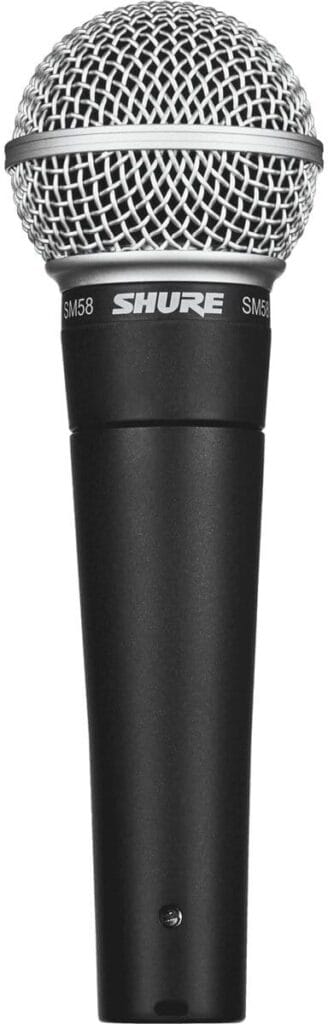
Pattern: Cardioid
Frequency Response: 50 Hz to 15,000 Hz
The SM58 has been the default vocal microphone in live sound for more than 40 years, and it earned that reputation the hard way: by working reliably, night after night, in venues that range from stadium stages to church basements. It has a tailored midrange presence boost that flatters most voices and helps them cut through a mix without sounding harsh, a built-in spherical filter that handles plosives and wind noise without a separate pop filter, and a cardioid pickup pattern that rejects sound from behind the mic while staying relatively forgiving if you drift slightly off-axis while performing.
That forgiveness matters more than people realize. A cardioid pattern has a wider effective pickup zone than a supercardioid one, which means a singer who moves around, doesn't hold perfect mic technique, or occasionally turns their head mid-line won't lose as much signal as they would on a tighter pattern.
Real buyer feedback on Zzounds backs up the reputation directly. One reviewer described trusting an SM58 for years of live performance specifically because of its dependability, while another recounted a real gig story: a lead vocalist was talked into switching to a competing brand's condenser mic by a salesperson, and during the actual soundcheck, the SM58 sounded noticeably better, forcing an on-the-spot mic swap back. Not every review is glowing.
One reviewer called it "pretty much standard and what everyone uses on a budget. Not my first choice," which is a fair, honest data point: the SM58's biggest strength, being the safe and expected default, is also exactly why some experienced singers eventually want something with more character.
Check the latest price on the SM58
Shure Beta 58A: Overview and Real Reviews
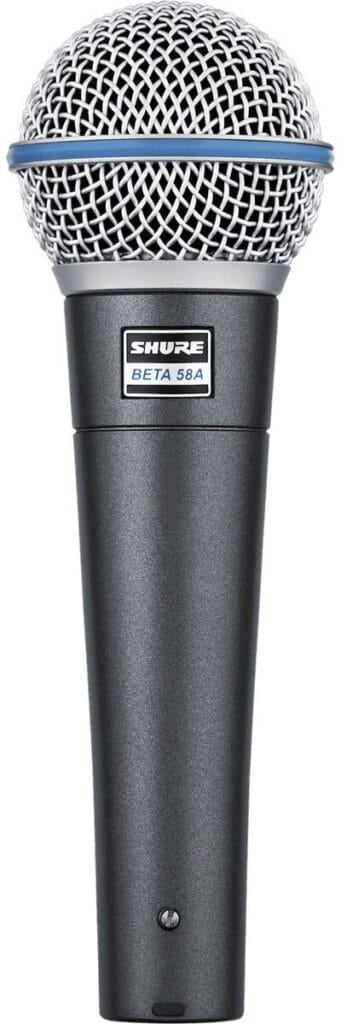
Pattern: Supercardioid
Frequency Response: 50 Hz to 16,000 Hz
The Beta 58A takes everything the SM58 does and pushes it further in three specific directions: more output, a tighter pickup pattern, and extended frequency response on both ends of the spectrum. The neodymium magnet delivers about 4 dB more output than the SM58, which translates directly into higher gain before feedback on your mixer or preamp. For a singer who has ever felt like they were being drowned out by the band, that extra headroom is not a subtle upgrade; it's the difference between leading the mix and fighting to be heard in it.
The supercardioid pattern is tighter and more directional than the SM58's cardioid pattern, which means better rejection of monitor wedges and other instruments on a loud stage, plus superior isolation if you're tracking multiple sources at once in a small studio. The tradeoff is that this narrower pickup zone demands more consistent mic technique; drift too far off-axis, and you'll lose more signal than you would on the SM58.
Shure's own bass roll-off shaping on the Beta 58A is specifically designed to work with the proximity effect rather than fight it, meaning you can work the mic close for a warm, intimate low end without it turning muddy or boomy the way some dynamic mics do up close.
Verified Zzounds reviews are strongly positive, sitting at a 5-star overall rating with 195 ratings. Several reviewers specifically described switching from the SM58 and hearing an immediate, obvious difference. One who had used SM58s for years described joining a band where the other three vocalists all used Beta 58As and "all sounded better than me," prompting a switch that they called permanent: "For live performance vocals, it doesn't get better."
Another described the jump as "day and night," bluntly calling the SM58 the weaker option by comparison after switching. A third reviewer offered a more specific technical reason for the switch: they'd found the SM58 required getting uncomfortably close to the capsule to get a usable output level, and the Beta 58A's hotter signal solved that without changing their technique.
Check the latest price on the Beta 58A
Head to Head: Output, Tone, and Pattern
Output level: The Beta 58A wins clearly here. About 4 dB more output means less gain needed at the preamp, which generally means a cleaner signal with less added noise and more headroom before feedback becomes a problem on a loud stage.
Tone: This is genuinely subjective and depends on your voice. The SM58's midrange presence boost flatters a wide range of voices without much extra brightness. The Beta 58A's extended high end (up to 16 kHz versus the SM58's 15 kHz) adds a touch more air and clarity, which several verified reviewers described simply as "brighter." Neither is objectively better; it's closer to comparing a warm tube amp to a cleaner solid-state one.
Polar pattern and feedback rejection: The Beta 58A's true supercardioid pattern rejects off-axis sound more aggressively than the SM58's cardioid pattern, which is a real, measurable advantage on loud stages with monitor wedges pointed at the mic. The tradeoff is a narrower forgiving zone, so singers with inconsistent mic technique may actually get more consistent results from the SM58's wider pattern.
Durability: Both are essentially tied and both are legendary for a reason. Shure's own drop test for the Beta 58A involved dropping a prototype ten times from ten feet with no loss of performance, and the SM58 has an equally storied reputation for surviving being dropped, stepped on, and generally abused on stages worldwide for decades.
Price: The SM58 is $70 cheaper. For a beginner, a backup mic, or a budget-conscious purchase, that's a meaningful difference that buys you nearly identical durability and a still-excellent sound.
Which One Should You Buy?
Get the SM58 if:
- You're buying your first serious vocal microphone and want the safest, most forgiving option
- You have a naturally strong, powerful voice that doesn't struggle for output
- You want a reliable backup or spare mic without spending Beta 58A money twice
- Your mic technique varies (you move around, don't always stay perfectly on-axis)
- You're on a tighter budget and want to put the savings toward other gear, like the picks in our Best Pop Filters and Mic Accessories for Singers guide.
Get the Beta 58A if:
- You have a quieter or breathier voice that struggles to cut through a full band mix
- You regularly perform on loud stages with monitor wedges where feedback is a real concern
- You want slightly more clarity and air in the high end
- You're recording in a small studio space and need better isolation from other instruments
- You have consistent mic technique and don't mind the narrower forgiving zone
If you're still not sure, the SM58 is the statistically safer first purchase, since it works for a wider range of voices and situations without requiring you to already know your specific vocal characteristics. Singers tend to graduate to the Beta 58A once they've performed enough to know exactly what they're missing.
For the full list of options beyond just these two, our Best Microphones for Singers guide covers both of these mics alongside alternatives from Sennheiser, Audix, and Shure's own broader lineup.
Frequently Asked Questions
Is the Beta 58A worth the extra money over the SM58?
For some singers, yes. If you have a quieter voice, perform on loud stages, or want extra clarity in the high end, the $70 difference is genuinely justified. If you have a strong voice and don't struggle with feedback or getting heard in a mix, the SM58 delivers nearly the same core performance for less.
Can I use the Beta 58A for recording, not just live shows?
Yes. Its tighter supercardioid pattern actually helps in a small studio, since it isolates your voice from other instruments better than a cardioid mic would. Pair it with a solid audio interface; our Best Audio Interfaces for Home Vocal Recording guide covers options that work well with dynamic mics like both of these.
Does the Beta 58A really sound different, or is it just louder?
Both. The extra output is real and measurable, and the tonal difference is also real. The Beta 58A's extended frequency response and different internal capsule and transformer design give it a genuinely different character, not just a volume boost on the same sound.
Which mic is better for a quiet or breathy singing voice?
The Beta 58A. Its hotter output and neodymium magnet mean you don't have to work the mic uncomfortably close just to get a usable signal level, which several verified buyers specifically confirmed after switching from the SM58 for this exact reason.
Is the SM58 too basic for a serious performer?
No. It remains the default professional vocal microphone in venues worldwide precisely because it works reliably for most voices and situations. Plenty of touring professionals use the SM58 by choice, not because they can't afford something else.
Do both microphones need phantom power?
No. Both are dynamic microphones and do not require phantom power, unlike condenser microphones. They work with virtually any mixer, interface, or PA system without special power requirements.
What's the difference between cardioid and supercardioid patterns?
A cardioid pattern, like the SM58's, picks up sound primarily from the front while rejecting sound from directly behind it, with a moderately wide forgiving zone. A supercardioid pattern, like the Beta 58A's, is more tightly focused with better rejection of side and rear sound, which improves feedback resistance and isolation but requires more precise positioning to get consistent results.
Final Verdict
Neither microphone is the wrong choice. Both are dynamic, both are essentially indestructible, and both have earned their reputations through decades of real use on real stages, not marketing.
The SM58 is the better default for most singers, especially beginners and anyone who wants one dependable mic that works in almost any situation.
The Beta 58A earns its higher price for singers who have specific problems it solves: not enough output, not enough feedback rejection, or not enough clarity in a busy mix.
If you're building out the rest of your setup around whichever mic you choose, our Singing Equipment Reviews pillar guide covers everything else you'll need, from stands and pop filters to PA systems and vocal processors. And if you perform live regularly, our Best Portable PA Systems for Gigging Singers and Best Vocal Effects Processors guides round out a complete stage-ready signal chain.