
The best throat lozenges for singers are glycerin-based or pectin-based products with soothing demulcent herbs, and the single most important thing to know is what to avoid: menthol, eucalyptus, and peppermint. That last part surprises most singers because those exact ingredients dominate the cough drop aisle and get marketed directly at vocalists. Multiple major voice centers and the American Academy of Otolaryngology all say the same thing, and it runs directly against what the packaging tells you.
This guide covers what voice doctors actually recommend, why the most popular "singer's lozenge" is usually the wrong choice, which lozenges are worth keeping in your bag, and one honest limitation nobody selling these products wants to mention. We'll also cover when a sore throat stops being a lozenge problem and becomes a doctor problem, because that line matters more for your career than any product on this page.
The Menthol Problem
Here is the thing almost nobody tells you at the pharmacy counter. Menthol feels cooling and soothing, which is exactly why it's in nearly every cough drop on the shelf. But that cooling sensation comes with a drying effect on the mucous membranes of your mouth and throat, and dryness is the enemy of a working voice.
This isn't a fringe opinion. Edie Hapner, Ph.D., Professor of Otolaryngology and co-director of the UAB Voice Center, has stated plainly that menthol-based lozenges can be quite drying and may actually worsen throat irritation. UT Southwestern Medical Center's voice care guidance says the same, noting that menthol dries the mouth, irritates throat tissues, and creates a cycle where you reach for more drops. Cambridge University Hospitals NHS guidance groups menthol and eucalyptus together as ingredients that irritate and dry the throat and voice box. The AAO-HNS Bulletin, published by the professional body for ENT physicians, states directly that active ingredients to be avoided include menthol, eucalyptus, and often peppermint.
The cycle those sources describe is the real danger. Menthol dries your throat; the dryness creates the tickle that makes you want to clear your throat or cough; throat clearing slams your vocal folds together, that irritation makes you want another lozenge, and around it goes. You end up more irritated than when you started.
Here's the irony worth noting: several of the most heavily marketed "singer's" cough drops are menthol products, sold with packaging language about supporting singers, teachers, and public speakers. Some contain 10mg of menthol per lozenge. The marketing and the medical guidance point in opposite directions.
There's a second problem ingredient too. Benzocaine and similar numbing agents show up in a lot of throat products, and they're arguably worse for a singer than menthol. Numbing your throat removes the pain signal that tells you to stop pushing. Cambridge University Hospitals guidance warns that antiseptic numbing ingredients may lead you to strain your voice without realizing the extent of the effort you're using, and the damage you're doing. Pain is information. Don't turn it off before a show.
An Honest Limitation Worth Knowing
Before we get to products, here's something the packaging will never tell you: lozenges don't actually touch your vocal folds.
Anything you swallow goes down your esophagus. Your vocal folds sit in your larynx, on the airway side. As UAB's Hapner puts it, lozenges can help hydrate your mouth and throat, but they don't reach or directly soothe your vocal folds. What a good lozenge genuinely does is keep your mouth and throat moist, which reduces the urge to cough and clear your throat, and that indirect benefit is real and worth having. But it's a comfort and behavior tool, not a direct treatment for your vocal cords.
This is also the main practical difference between lozenges and tea. A lozenge works locally in your mouth and gives you something to do with the tickle in your throat. Warm tea contributes to your overall fluid intake, which is what actually hydrates your vocal folds over time, and it delivers demulcent herbs in a form you can drink several times a day. Our companion guide to the best tea for singers covers that side in full, including one very popular tea that singers should probably skip.
Real vocal fold hydration comes from systemic water intake over time, and from steam or saline nebulization, which is the only method that puts moisture directly onto the folds. Our complete guide to keeping your voice healthy covers the hydration side in more depth.
Knowing this changes how you should use these products. A lozenge before a show is a reasonable comfort measure. A lozenge as your entire vocal health strategy is not.
What to Look For Instead
Voice specialists consistently point toward two categories.
Glycerin or pectin bases. Glycerin is a humectant, meaning it attracts and holds moisture rather than evaporating it away. UT Southwestern specifically recommends glycerin-based throat drops for professional voice users. Pectin (the same thickener used in jam) forms a soothing coating without the drying effect of menthol.
Demulcent herbs. A demulcent is a substance that forms a protective, soothing film over mucous membranes. The three that come up repeatedly in voice care guidance are slippery elm bark, marshmallow root, and licorice root. All three are high in mucilage, which is what creates that coating sensation.
Sugar-free versions are generally preferable if you'll be using them regularly, both for dental reasons and because some singers find sugar increases mucus thickness.
Best Throat Lozenges for Singers
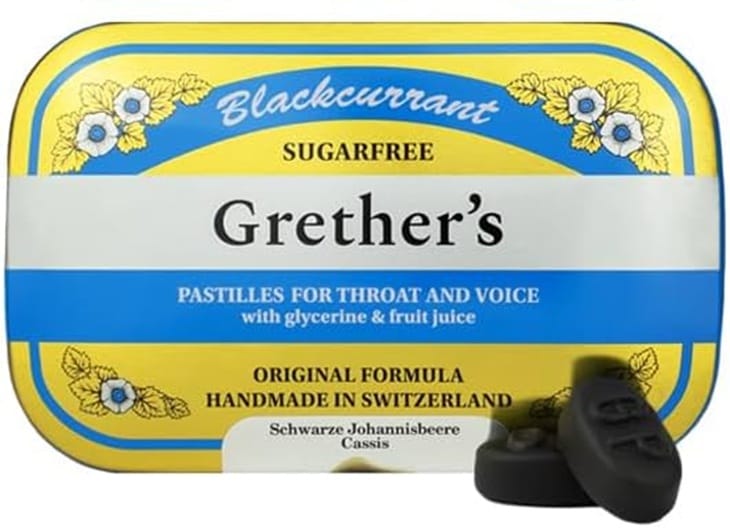
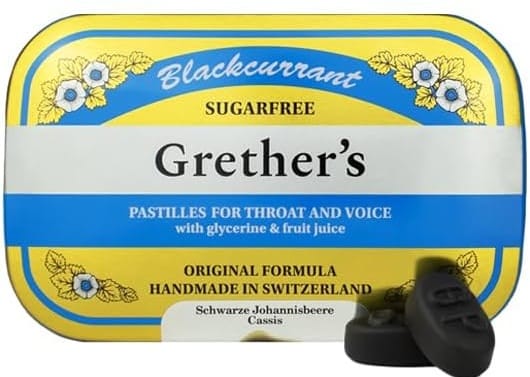
1. Grether's Pastilles (Best Overall)
Type: Glycerin-based pastille
Where to buy: Check current price on Amazon
Grether's is the pastille that voice doctors name unprompted. UT Southwestern's voice care guidance specifically recommends Grether's Pastilles for professional voice users, noting they've recommended them for years. They're glycerin-based, which means they add oral moisture instead of stripping it, and they dissolve slowly enough that one lasts a genuinely long time.
They come in blackcurrant (the classic) and other flavors, in both sugared and sugar-free versions. The sugar-free version uses xylitol. They're noticeably more expensive than drugstore cough drops, and the tin is heavier than a paper sleeve, but for a working singer this is the closest thing to a consensus pick among voice professionals.
Why singers like them: Glycerin base adds moisture, long dissolve time, no menthol, widely endorsed by voice clinicians.
Watch out for: Price per pastille is high compared to a bag of cough drops. The blackcurrant flavor is distinctive and not universally loved.
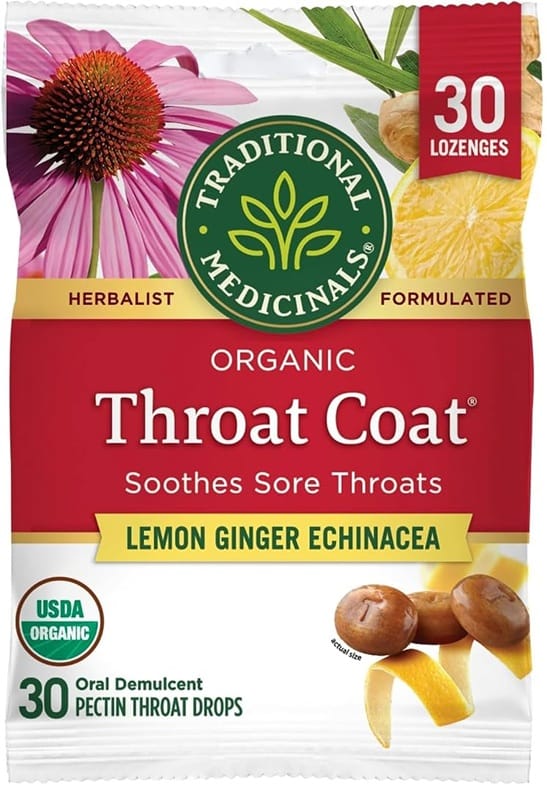
Traditional Medicinals Throat Coat Lozenges (Best Demulcent Option)
Type: Herbal lozenge with slippery elm, licorice, marshmallow root
Where to buy: Check current price on Amazon
These are the lozenge counterpart to the tea below, built around the same demulcent trio: slippery elm bark, licorice root, and marshmallow root. If you want the coating sensation that singers describe as the main benefit of Throat Coat, but you need it in a pocket-sized format you can use backstage without brewing anything, this is the direct answer.
Why singers like them: Demulcent herbs that voice specialists actually name, portable, no menthol.
Watch out for: The licorice flavor is polarizing. See the licorice safety note further down if you plan to use these heavily.
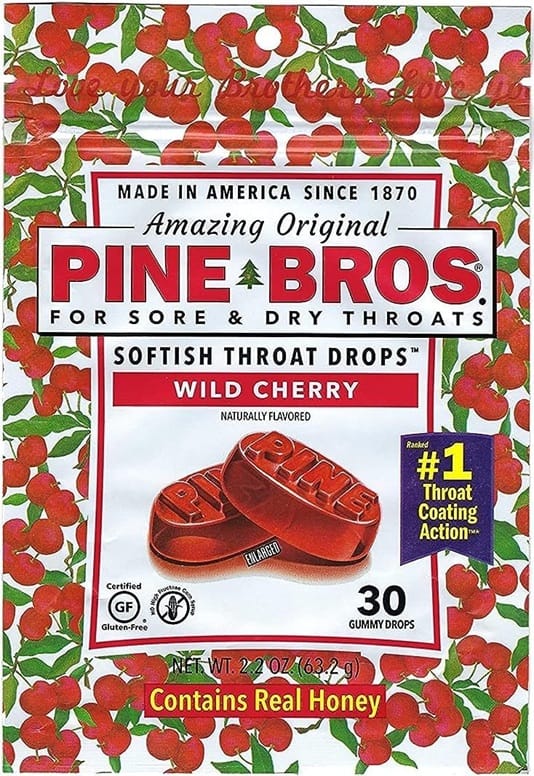
Pine Brothers Softish Throat Drops (Best Budget Glycerin Option)
Type: Glycerin-based soft drop
Where to buy: Check current price on Amazon
Pine Brothers has been around since the 1870s and makes a genuinely soft, glycerin-based drop. Dr. Gwen Korovin, a well-known voice physician who has worked with many professional singers, has recommended sticking with plain lozenges whose active ingredient is glycerin, naming Pine Brothers honey drops alongside Grether's. They're considerably cheaper than Grether's and easier to find in ordinary drugstores.
Why singers like them: Genuine glycerin base at a fraction of the premium price, soft texture, easy to find.
Watch out for: Shorter dissolve time than Grether's. The soft texture means they can stick together in a warm bag.
Luden's Wild Cherry (Best Drugstore Pick)
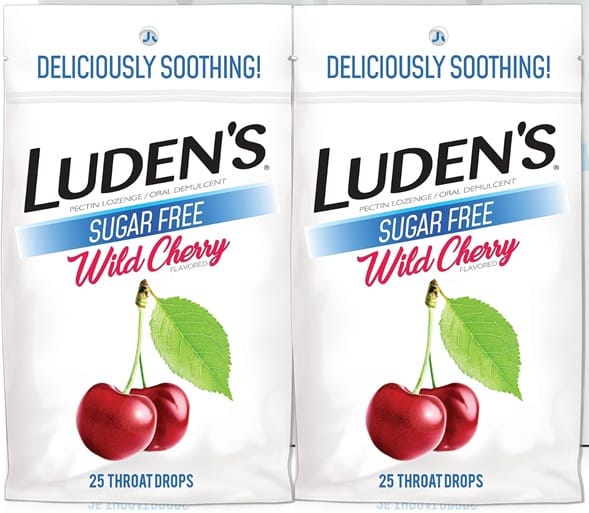
Type: Pectin-based drop
Where to buy: Check current price on Amazon
The original Luden's Wild Cherry is pectin-based rather than menthol-based, which puts it in the acceptable category despite being a standard drugstore product available almost anywhere. It's the pick for the situation every singer eventually faces: you're on the road, your throat is scratchy, and the only thing open is a gas station.
Why singers like them: Pectin base, available literally everywhere, inexpensive.
Watch out for: Luden's makes multiple varieties, and some do contain menthol. Read the active ingredient panel, not the flavor name.
Halls Breezers (Best Widely Available Non-Menthol Halls)
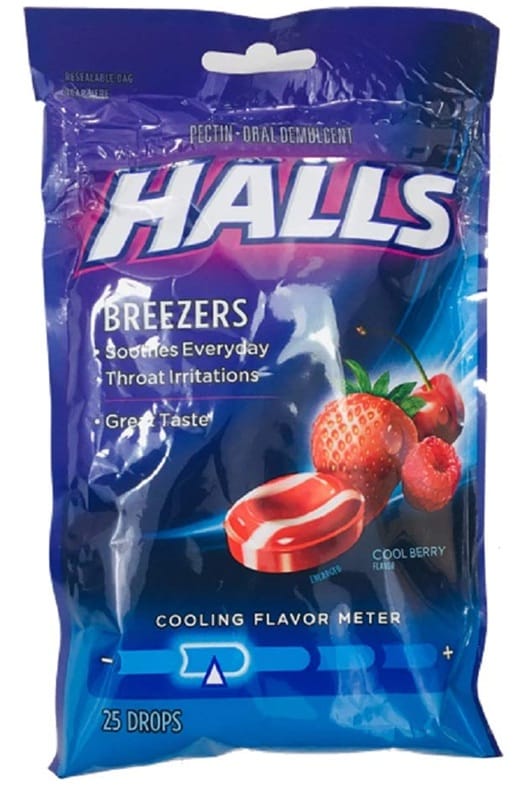
Type: Pectin-based drop
Where to buy: Check current price on Amazon
Most Halls products are menthol-forward and should be skipped by singers. Breezers are the exception, using pectin instead, and UT Southwestern's voice guidance names them alongside Grether's as an acceptable option. Worth knowing specifically because Halls is the brand most likely to be handed to you by a well-meaning bandmate who doesn't know about the menthol issue.
Why singers like them: Pectin base, extremely easy to find, familiar brand.
Watch out for: Only the Breezers line qualifies. Regular Halls, Halls Defense, and most other Halls varieties contain menthol.
XyliMelts (Best for Overnight Dry Mouth)
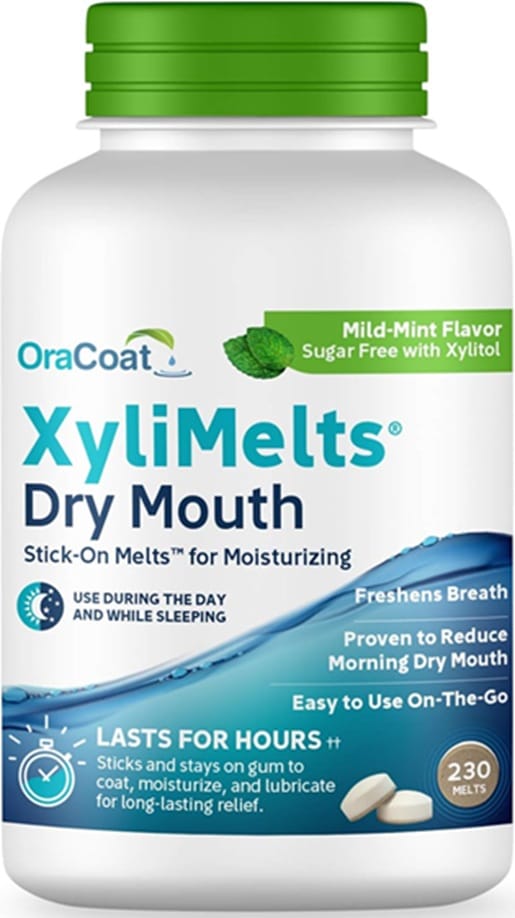
Type: Adhering xylitol disc
Where to buy: Check current price on Amazon
These are a different category entirely. XyliMelts are small discs that adhere to your gum and release moisture slowly over hours, designed for dry mouth rather than sore throat. For singers who wake up with a parched throat, breathe through their mouth at night, or perform in dry climates and hotel rooms, this addresses the overnight dryness that a daytime lozenge can't.
Why singers like them: Works while you sleep, targets the specific problem of overnight dryness, xylitol is tooth-friendly.
Watch out for: Takes some getting used to. Not a sore throat remedy; it's a dryness remedy.
Ingredients to Avoid
Keep this list on your phone for reading labels in a pharmacy aisle:
- Menthol. Drying to mucous membranes. The single most common problem ingredient in products marketed to singers.
- Eucalyptus. Named alongside menthol by both the AAO-HNS and NHS guidance as drying and irritating.
- Peppermint. Often grouped with the above by ENT guidance.
- Benzocaine and other numbing agents. Masks the pain signal that tells you to stop, which is how singers push through into real injury.
- Alcohol. Drying, and present in some throat sprays and gargles.
- Heavy acidity. Lemon and similar acidic additives can irritate laryngeal tissue, especially with reflux.
- Decongestants (the "D" and "DM" formulas). These dry out mucous membranes by design. UT Southwestern specifically flags avoiding the D and DM variants for vocal health.
How to Actually Use a Lozenge Before Singing
A few practical points that make a real difference:
Don't sing with one in your mouth. This should be obvious, but it happens constantly. A lozenge is a choking hazard while singing; it interferes with your articulation, and it changes the shape of your oral resonating space. Finish it before you start.
Give yourself a buffer. Most singers find finishing a lozenge 10 to 15 minutes before they sing works well. The moisture stays; the distraction is gone.
Let it dissolve rather than chewing it. The entire mechanism is slow release of glycerin or demulcent compounds across your oral tissue. Crunching it defeats the purpose and gets you a mouthful of sugar instead.
Pay attention to how often you're reaching for one. Occasional use before a demanding show is reasonable. Needing one constantly to get through normal singing is a signal about something else, and no amount of glycerin fixes a technique or health problem underneath.
Drink water alongside it. The lozenge handles surface comfort in your mouth. Actual vocal fold hydration comes from systemic fluid intake, which means water and warm caffeine-free drinks over the course of the day, not a pastille ten minutes before you sing.
Safety Notes Worth Reading
This section matters more than the product recommendations, so please don't skip it.
Licorice root is not risk-free. It appears in nearly every product on this page, and in large amounts or with chronic daily use it can raise blood pressure and affect potassium levels. Traditional Medicinals' own labeling advises consulting a healthcare practitioner before use if you have low potassium, take diuretics, corticosteroids, cardiac glycosides such as digoxin, or potassium-depleting medications, or if you are pregnant or breastfeeding.
It also advises against use if you have high blood pressure, heart disease, or impaired kidney or liver function. Occasional use is a different situation than four cups a day for months.
Herbal supplements are not FDA-regulated the way medications are. The AAO-HNS makes this point directly: the FDA does not research or regulate herbal supplements the way it does pharmaceuticals, which means there's limited research on safety and efficacy for many of these ingredients, and no authority guaranteeing that a bottle's contents match its label.
That's not a reason to avoid these products, but it is a reason to hold your expectations loosely and buy from established brands.
Some of the benefit is likely placebo, and that's genuinely okay. The AAO-HNS notes that many performers swear by one product or another, that many are probably somewhat helpful or at least mostly harmless, and that there's likely some placebo effect involved. If a pre-show ritual calms your nerves and keeps you from over-clearing your throat, that has real value even if the mechanism isn't what the packaging claims.
When to Stop Reaching for Lozenges and See a Doctor
This is the part of the article that matters most for your voice long-term.
A lozenge is for occasional dryness and mild irritation. It is not a treatment for an underlying problem, and using one to push through something serious is how singers turn a recoverable issue into a lasting one.
Voice specialists are consistent on the threshold: if your voice has changed and the issue lasts more than two weeks, see an otolaryngologist. UAB's guidance is explicit that a persistent cough signals an underlying problem requiring medical evaluation, and that only a specialist who can directly examine your vocal folds can accurately diagnose the cause of a voice change and recommend effective treatment.
If you need pain relief regularly just to get through singing, that itself is a signal that something underlying needs to be addressed, not managed with more lozenges.
Ask your primary care provider for an ENT referral, ideally one who works with professional voice users. No product on this page substitutes for someone actually looking at your vocal folds.
For the bigger picture on protecting your voice day-to-day, our Vocal Health and Maintenance pillar guide covers hydration, rest, technique, and lifestyle factors in full. And since a surprising amount of throat irritation traces back to vocal technique problems rather than anything you can fix with a lozenge, our guide to the best online singing courses is worth a look if you find yourself constantly hoarse after singing.
Frequently Asked Questions
Are menthol cough drops bad for singers?
Generally yes, for regular use. Menthol has a drying effect on the mucous membranes of the mouth and throat, and multiple voice centers, including UAB and UT Southwestern, along with the AAO-HNS, advise voice users to avoid it. The cooling sensation feels soothing but can create a cycle of dryness, throat clearing, and further irritation. Glycerin-based or pectin-based lozenges are the recommended alternative.
What lozenges do professional singers actually use?
Glycerin-based pastilles like Grether's come up most often, and they're specifically recommended by voice clinicians at institutions like UT Southwestern. Demulcent herbal lozenges containing slippery elm, licorice, or marshmallow root are also common. The consistent theme is avoiding menthol and numbing agents.
Do throat lozenges reach your vocal cords?
No. Anything you swallow travels down the esophagus, while your vocal folds sit in the larynx on the airway side. Lozenges moisturize the mouth and throat, which reduces the urge to cough and clear your throat, but they don't directly contact or treat the vocal folds. Steam and saline nebulization are methods that put moisture directly on the folds.
Should I use numbing throat spray before a performance?
No. Numbing agents like benzocaine remove the pain signal that tells you when you're straining, which can lead you to push far harder than you should and cause real damage without realizing it. If you need to numb your throat to get through a show, the honest answer is that you probably shouldn't be singing that show.
Can I sing with a lozenge in my mouth?
Don't. It's a genuine choking risk while singing; it interferes with your articulation, and it alters your oral resonating space. Finish it 10 to 15 minutes before you sing so you keep the moisture without the interference.
Are lozenges or tea better for singers?
They do different jobs. Lozenges work locally in your mouth and are portable, which makes them useful backstage or between sets. Tea contributes to your overall fluid intake, which hydrates your vocal folds over time, and delivers demulcent herbs in larger quantities. Most singers use both. Our guide to the best tea to drink for singers covers that side.
Can lozenges fix a hoarse voice?
No. Lozenges address comfort and dryness, not the underlying cause of hoarseness. Persistent hoarseness can indicate vocal fold injury, reflux, or other conditions that need proper diagnosis. If a voice change lasts more than two weeks, see an otolaryngologist rather than continuing to self-treat.
Final Picks
- Best Overall Lozenge: Grether's Pastilles
- Best Demulcent Lozenge: Traditional Medicinals Throat Coat Lozenges
- Best Budget Glycerin Option: Pine Brothers Softish Throat Drops
- Best Drugstore Pick: Luden's Wild Cherry (check the label, not the flavor name)
- Best Overnight Dry Mouth Fix: XyliMelts
- Best Widely Available Non-Menthol: Halls Breezers
The honest summary: these products are comfort tools that reduce he urge to cough and clear your throat, and that's a real benefit worth having in your bag. They are not a substitute for hydration, rest, good technique, or a doctor when something is genuinely wrong. Buy the glycerin or demulcent options, skip anything with menthol or any numbing agent, and follow the two-week rule.
*This article is for general information and is not medical advice. Consult a physician or otolaryngologist about your specific situation, especially before using herbal products regularly or if you take medication or have an existing health condition.*