
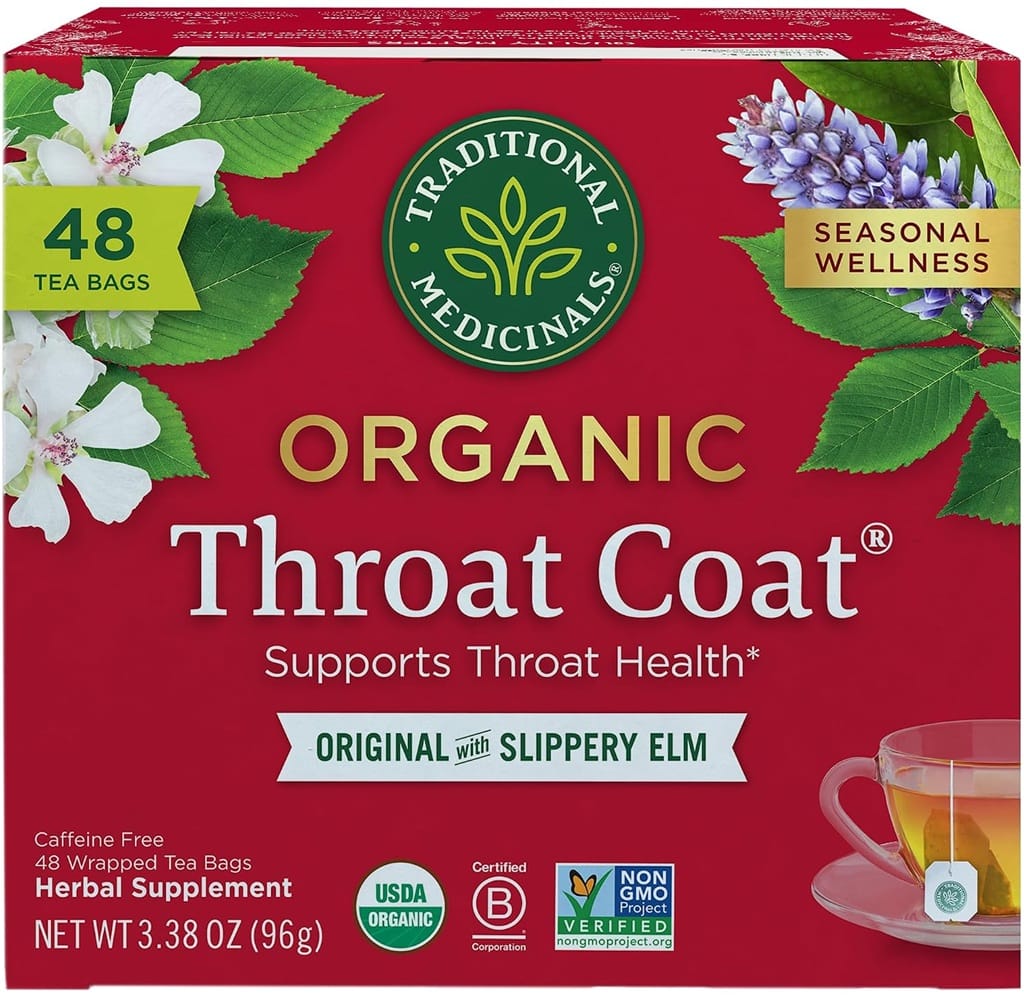
The best tea for singers is a warm, caffeine-free herbal blend built on demulcent herbs like slippery elm, marshmallow root, and licorice. The most important thing to know is that peppermint tea, one of the most commonly recommended teas for sore throats, is one most singers should skip. Peppermint contains menthol, and menthol is specifically on the list of ingredients that ENT physicians tell voice users to avoid.
That single fact separates this guide from most tea-for-singers articles, which cheerfully list peppermint alongside genuinely helpful options. This guide covers what actually helps, what to avoid and why, how to brew demulcent herbs correctly (it's different from normal tea and most people get it wrong), and the temperature matters more than the blend you choose.
Why Tea Beats a Lozenge for Hydration
Here's a distinction worth understanding, because it explains what tea can and can't do for your voice.
Nothing you drink touches your vocal folds. Liquid goes down your esophagus; your vocal folds sit in your larynx, on the airway side. Anything that landed directly on them would make you cough violently. So when a tea company promises to coat your vocal cords, that isn't literally what's happening.
The two things tea actually does, and both are real. First, the demulcent herbs form a soothing film over the tissue in your throat above the larynx, which reduces the tickle and the urge to clear your throat. Throat clearing slams your vocal folds together, so anything that reduces it protects your voice indirectly. Second, and more importantly, tea contributes to your systemic hydration, and is what actually keeps your vocal folds lubricated and supple over time.
That second point is where tea genuinely beats a lozenge. A pastille adds moisture to your mouth for fifteen minutes. Four cups of caffeine-free tea throughout a day meaningfully contribute to the body-wide fluid balance that determines how your vocal folds behave. If you're choosing between the two, tea does more of the work that matters. Our companion guide to the best throat lozenges for singers covers the portable option for when brewing isn't practical.
The Peppermint Problem
Peppermint tea shows up on nearly every "best tea for your throat" list, and for general sore throat comfort that's fine. For singers specifically, there's a problem.
Peppermint's active compound is menthol. The AAO-HNS Bulletin, published by the professional body for ENT physicians, lists menthol, eucalyptus, and often peppermint among the active ingredients voice users should avoid. The reasoning is the same that applies to menthol cough drops: it feels cooling but has a drying effect on the mucous membranes, and dryness is the core problem you're trying to solve.
There's a second, less obvious issue. Mint relaxes the lower esophageal sphincter, the muscle that keeps stomach acid where it belongs. Acid reflux is one of the most common causes of chronic hoarseness and persistent throat clearing in singers, often without any of the heartburn symptoms people associate with it. If reflux is part of your picture, peppermint tea can make it worse in a way that shows up in your voice days later.
None of this means peppermint tea is poison. If you love it and it doesn't bother you, an occasional cup on a rest day is unlikely to matter. But it shouldn't be your go-to before a performance, and it's not the tea to reach for when your throat is already dry.
What Actually Helps: Demulcents
A demulcent is a substance that becomes viscous in water and forms a protective, slippery film over mucous membranes. That film is the coating sensation singers describe, and it's the reason certain herbs show up again and again in voice care guidance.
The three that matter most:
Slippery elm bark. The most frequently named demulcent in voice care contexts. High in mucilage, mild in flavor, and the anchor ingredient in the most popular singer's tea on the market.
Marshmallow root. Another high-mucilage herb, often paired with slippery elm. Not related to the confection beyond a shared ancestor.
Licorice root. Both a demulcent and a mild anti-inflammatory, plus it makes blends taste naturally sweet without added sugar. Comes with real safety caveats covered further down.
Two more herbs worth knowing that work differently:
Ginger. Anti-inflammatory rather than demulcent. Useful when your throat feels swollen or tight rather than dry, and it helps thin thick mucus.
Chamomile. Not a throat herb at all. It's a calming herb, which makes it genuinely useful the night before a performance or during pre-show nerves, since tension in your jaw and neck translates directly into vocal tension.
Best Tea for Singers
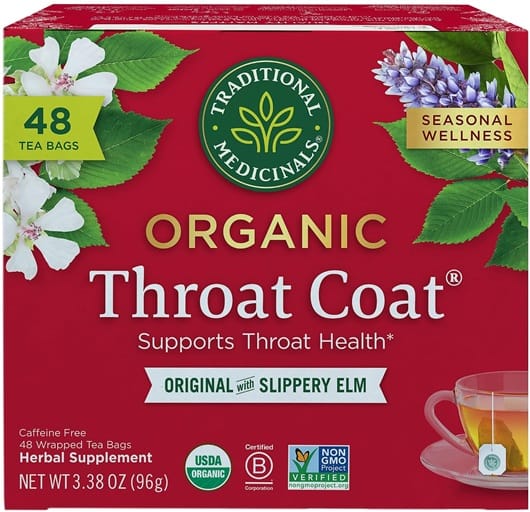
Traditional Medicinals Throat Coat, Original (Best Overall)
Where to buy: Check current price on Amazon
This is the tea singers actually talk about, and it earns the reputation. The formula is built on organic licorice root, slippery elm bark, and marshmallow root, the exact demulcent trio voice care guidance points to, rounded out with wild cherry bark, fennel, cinnamon, and orange peel. The mucilaginous compounds release into hot water and form a coating over the throat's mucous membranes, which is where the distinctive silky texture comes from.
It's also the tea most singers name when asked. Victoria Justice, discussing her pre-recording routine, described Throat Coat with a little honey as her go-to before singing.
One critical buying note: Traditional Medicinals makes several Throat Coat variants, and one of them, Throat Coat Eucalyptus, contains eucalyptus leaf and spearmint. Both are on the AAO-HNS avoid list for voice users. If you're buying Throat Coat as a singer, buy the Original with slippery elm, not the Eucalyptus version. This is an easy mistake since both sit under the same brand name on the same shelf.
Watch out for: The licorice flavor is strong and polarizing. See the safety section on licorice before making it a daily habit.
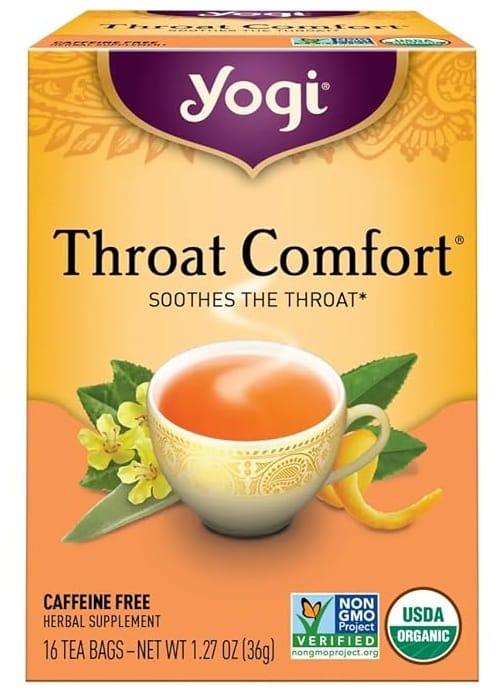
Yogi Throat Comfort (Best Alternative)
Where to buy: Check current price on Amazon
A comparable organic herbal blend built around licorice root, slippery elm, and wild cherry bark. Caffeine-free, generally less expensive than Throat Coat, and a reasonable option if you find Throat Coat's licorice character overwhelming or you just want variety in the rotation.
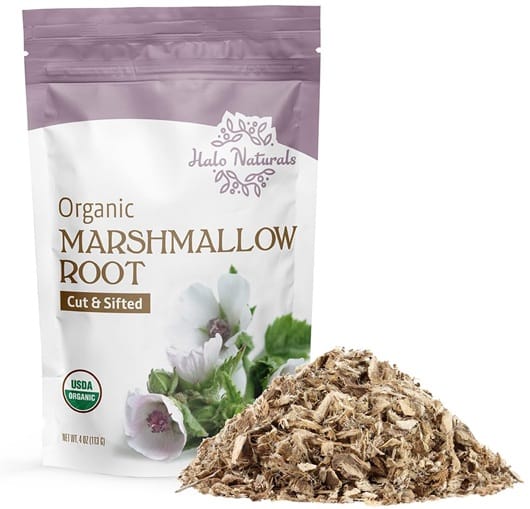
Plain Marshmallow Root Tea (Best Single-Herb Demulcent)
Where to buy: Check current price on Amazon
If blends aren't your thing, or you want the demulcent effect without licorice (relevant if you have blood pressure concerns), plain marshmallow root is the cleanest option. It's mild, faintly sweet, and does one job well. Loose root gives noticeably better extraction than dusty pre-bagged tea, and it benefits from a long steep.
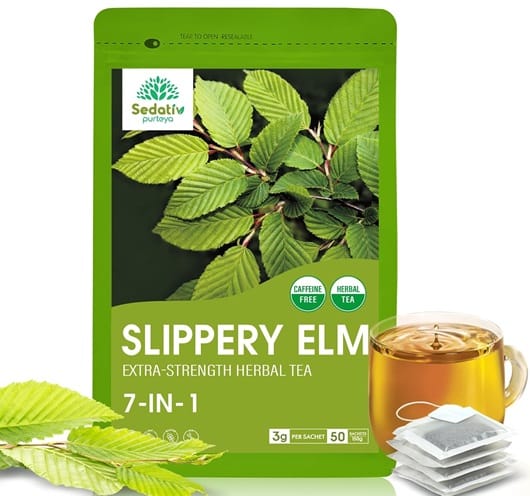
Slippery Elm Tea (Best for a Persistent Tickle)
Where to buy: Check current price on Amazon
Slippery elm on its own produces the thickest coating sensation of anything in this guide, which some singers love, and others find texturally odd. It's particularly useful for the dry, nagging tickle that keeps making you want to clear your throat, since it addresses that specific sensation directly.
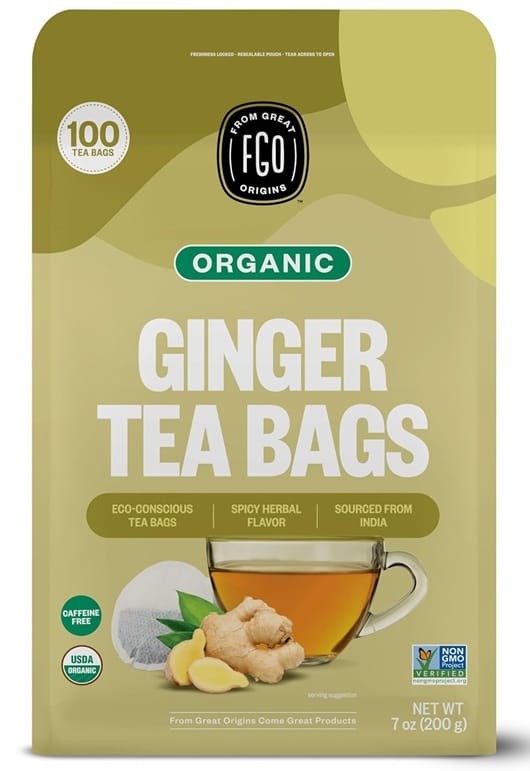
Ginger Tea (Best for Swelling and Thick Mucus)
Where to buy: Check current price on Amazon
Reach for ginger when the problem is inflammation rather than dryness: after a long rehearsal, when your throat feels tight or swollen, or when mucus feels thick and sticky. It works differently from the demulcents, so it complements them rather than replacing them. Fresh sliced ginger steeped in hot water works as well as anything bagged.
Watch out for: Ginger can aggravate reflux in some people. If you're reflux-prone, keep the amount modest.
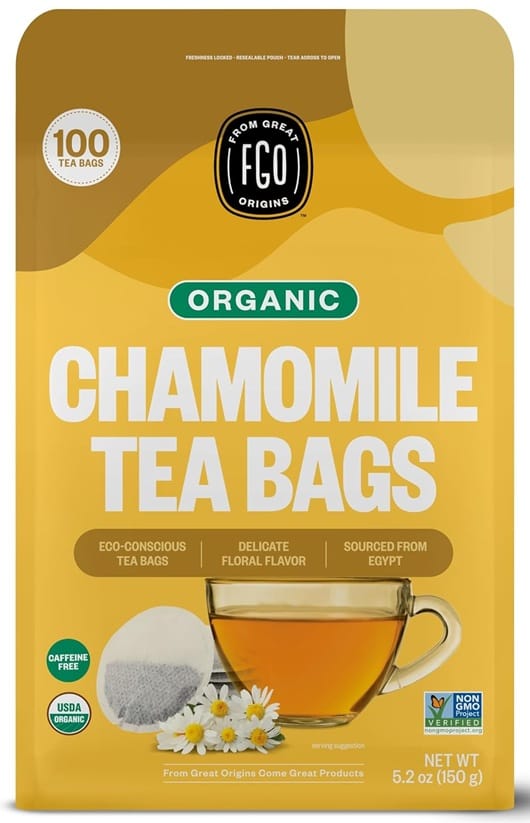
Chamomile (Best for Pre-Performance Nerves)
Where to buy: Check current price on Amazon
Not a throat tea. A nerves tea. Chamomile's value for singers is that it's calming and caffeine-free, which makes it useful the night before a show when you need to sleep, or an hour before when your jaw is locked up with anxiety. Physical tension in the neck and jaw is a real vocal problem, and anything that reduces it helps your singing.
Watch out for: Chamomile is in the ragweed family. If you have ragweed allergies, skip it.
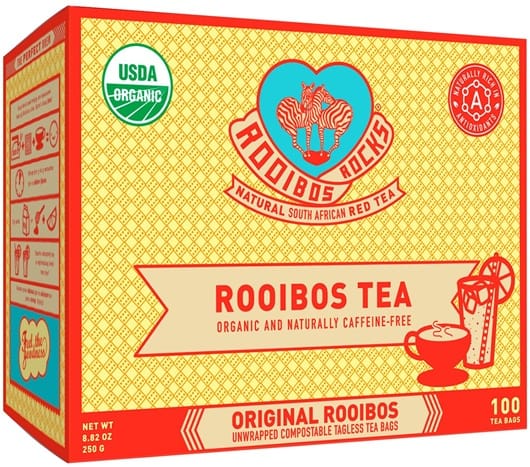
Rooibos (Best Everyday Caffeine-Free Base)
Where to buy: Check current price on Amazon
Rooibos is naturally caffeine-free and has enough body and depth to satisfy the craving for a "real" cup of tea, which makes it the practical substitute for black tea on performance days. It's not a throat treatment; it's a hydration vehicle that doesn't work against you, and that's genuinely useful.
Honey and Warm Water (Best Free Option)
Where to buy: Your kitchen
Not everything needs to be a product. Honey is a demulcent in its own right, and warm water with honey is soothing, contributes to hydration, and is much cheaper. A common preparation among voice teachers is roughly 12 ounces of warm water with a couple of tablespoons of honey.
On the lemon question: many recipes add lemon, but some voice clinicians recommend against it, since acid can irritate laryngeal tissue and aggravate reflux. If you're reflux-prone, honey and warm water alone is the safer version. If you want the citrus flavor without the acid load, blends using dried orange or lemon peel give you the character without the same problem.
Teas to Skip Before You Sing
- Peppermint and spearmint. Menthol content, drying effect, and mint relax the lower esophageal sphincter, which can worsen reflux.
- Throat Coat Eucalyptus specifically. Contains eucalyptus and spearmint, both on the ENT avoid list, despite sharing a brand name with the excellent Original version.
- Black, green, and oolong tea. All contain caffeine, which is mildly diuretic. Save them for rest days rather than performance days. Decaffeinated versions are fine.
- Yerba maté. Higher caffeine than most teas.
- Heavy hibiscus and other very acidic infusions. Acid can sting an irritated larynx and aggravate reflux.
- Anything loaded with sugar. Heavy sweetening can increase the sensation of thick mucus for some singers.
- Milky chai and dairy add-ins. Dairy thickens mucus sensation for many people, which is the opposite of what you want before singing.
How to Brew It Properly
Most people brew demulcent teas the same way they brew a normal cup, and get maybe half the benefit. Roots and barks are not leaves, and they release their compounds differently.
Steep far longer than you think. Leaves and flowers need 3 to 5 minutes. Roots and barks like slippery elm, marshmallow, and licorice need 10 to 15 minutes to release their mucilage properly. Traditional Medicinals' own instructions for Throat Coat specify 10 to 15 minutes.
Cover the cup while it steeps. This keeps the volatile aromatic compounds in the cup instead of evaporating into your kitchen.
Squeeze the bag before you remove it. With mucilaginous herbs, there's a meaningful amount of the good stuff still in the bag.
Use loose herb or sliced fresh root when you can. It extracts better than finely ground material in a bag.
Add honey after it cools slightly. Very hot liquid can degrade some of honey's more delicate components, and you're going to let the tea cool before drinking anyway.
Don't over-steep hoping for more effect. Past a point, you extract bitterness rather than benefit, and bitterness makes people tense up rather than relax.
The Temperature Rule
This matters more than which tea you choose, and it's the detail most guides skip.
Drink it warm, not hot. Scalding liquid irritates the very tissue you're trying to soothe, which is counterproductive when your throat is already sensitive. The practical test: if it's too hot to sip comfortably, it's too hot for a throat that's already working hard. Let it sit two or three minutes.
Iced tea is the other end of the same mistake. Very cold liquid can cause the muscles surrounding the larynx to constrict, which is the opposite of the free, relaxed state you want when singing. Save iced drinks for after the show.
The target is comfortably warm, the temperature you'd describe as pleasant rather than bracing. If you need to keep tea warm backstage during a long wait, a Yeti Rambler keeps it at a reasonable temperature far better than a mug going cold on a table.
Safety Notes Worth Reading
Licorice root deserves genuine caution, especially in tea form. It appears in most of the blends on this page, and tea is where the dose gets meaningful, since Traditional Medicinals suggests 4 to 6 cups daily during periods of need. In large amounts or with chronic use, licorice can raise blood pressure and affect potassium levels.
Traditional Medicinals' own labeling advises consulting a healthcare practitioner before use if you have low potassium levels, take diuretics, corticosteroids, cardiac glycosides such as digoxin, potassium-depleting medications, or if you are pregnant or breastfeeding. It also advises against use entirely if you have high blood pressure, heart disease, or impaired kidney or liver function, or if you're allergic to plants in the parsley family. This is one of the few genuinely important warnings in the vocal health space, and heavy daily use for months is a different situation from a cup before a show.
If licorice is a problem for you, plain marshmallow root or slippery elm gives you the demulcent effect without it.
Herbal products are not FDA-regulated the way medications are. The AAO-HNS states this directly: the FDA doesn't research or regulate herbal supplements the way it does pharmaceuticals, so research on safety and efficacy is limited for many of these ingredients, and no authority guarantees a package's contents match its label. Buy from established brands and hold your expectations loosely.
When Tea Isn't the Answer
Tea is a comfort and hydration tool. It is not a treatment, and it will not fix a voice that has been pushed too hard.
If your voice has changed and it lasts more than two weeks, see an otolaryngologist. Voice specialists are consistent on that threshold. A persistent cough signals an underlying issue that needs evaluation, and only a specialist who can examine your vocal folds directly can identify what's actually happening and treat it appropriately.
The specific failure mode to avoid: using tea as a reason to push through a voice that's asking for rest. Warm tea temporarily makes a strained voice feel better, and feeling better is not the same as being better. If you're singing on a genuinely damaged voice, the tea is helping you do more damage comfortably.
For the day-to-day habits that prevent most of these problems, our Vocal Health and Maintenance pillar guide covers hydration, rest, and lifestyle in full. Our guide to the best online singing lessons covers the technique side, since chronic hoarseness often traces back to how you're singing rather than what you're drinking.
Frequently Asked Questions
Is peppermint tea bad for singers?
For regular use before singing, probably yes. Peppermint's active compound is menthol, which the AAO-HNS lists among ingredients voice users should avoid because of its drying effect on mucous membranes. Mint also relaxes the lower esophageal sphincter, which can worsen acid reflux, a common cause of chronic hoarseness in singers. Occasional use on a rest day is unlikely to matter.
Does tea actually coat your vocal cords?
Not literally. Anything you drink goes down your esophagus, while your vocal folds sit in the larynx on the airway side. The soothing sensation happens in the throat tissue above the folds. The real benefit is twofold: demulcent herbs reduce the urge to cough and clear your throat, and the fluid contributes to systemic hydration, which is what actually keeps your vocal folds lubricated.
What tea do professional singers drink?
Traditional Medicinals Throat Coat comes up more than any other by a wide margin, usually with honey. Voice teachers recommend it regularly, and singers mention it in interviews about their pre-performance routines.
Can I drink caffeinated tea before singing?
Better not to. Caffeine is mildly diuretic, and black, green, and oolong teas all contain it. Save them for rest days, or choose decaffeinated versions. Rooibos gives you a full-bodied cup with no caffeine at all.
How hot should tea be for your voice?
Comfortably warm, not hot. Scalding liquid irritates throat tissue that's already sensitive, and very cold liquid can cause the muscles around the larynx to constrict. If it's too hot to sip comfortably, let it cool two or three minutes first.
How long should I steep tea for my throat?
Longer than normal tea. Roots and barks like slippery elm, marshmallow, and licorice need 10 to 15 minutes covered to release their mucilage, compared to 3 to 5 minutes for ordinary leaf tea. Squeeze the bag before removing it.
Is honey good for singers?
Yes. Honey is a demulcent that coats and soothes, and warm water with honey contributes to hydration without caffeine or alcohol. Add it after the tea cools slightly. If you're reflux-prone, consider skipping the lemon that often gets added, since acidity can irritate laryngeal tissue.
How many cups a day is safe?
For a blend without licorice, as much as you comfortably want. For licorice-based blends like Throat Coat, be more careful with heavy daily use over long periods, and read the safety section above regarding blood pressure and potassium.
Final Picks
- Best Overall: Traditional Medicinals Throat Coat, Original (not the Eucalyptus version)
- Best Alternative: Yogi Throat Comfort
- Best Single-Herb Demulcent: Marshmallow Root Tea
- Best for a Persistent Tickle: Slippery Elm Tea
- Best for Swelling and Thick Mucus: Ginger Tea
- Best for Pre-Performance Nerves: Chamomile
- Best Everyday Caffeine-Free Base: Rooibos
- Best Free Option: Warm water and honey
The short version: caffeine-free, built on demulcent herbs, steeped long, drunk warm rather than hot, and not peppermint. Get those five things right, and the specific brand matters far less than the internet suggests.
*This article is for general information and is not medical advice. Consult a physician or otolaryngologist about your specific situation, especially before using herbal products regularly or if you take medication or have an existing health condition.*