The best books on singing technique depend almost entirely on one thing: whether you're a singer trying to practice better, or a teacher trying to understand the voice as a system. Those are two different bookshelves, and mixing them up is the single most common reason singers buy an expensive, highly-recommended book and never make it past chapter three. This guide sorts the genuinely canonical texts by who each one was actually written for, so you buy the one that fits where you are.
Most "best singing books" lists online are Amazon bestseller rankings, with descriptions copied from the back covers. That approach hides the problem entirely, because a graduate-level voice pedagogy textbook and a practical self-study program can sit side by side on the same list looking equally appealing. They are not equally appealing. One of them will teach you to sing better this month, and the other will teach you laryngeal anatomy in Latin.
The Mistake Almost Everyone Makes
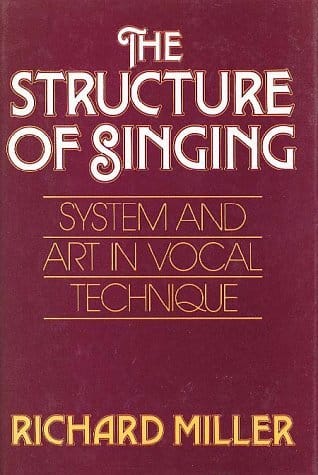
Here's what happens constantly. A singer asks for book recommendations. Someone knowledgeable names Richard Miller's The Structure of Singing, which is genuinely one of the most important texts ever written on vocal technique. The singer buys it, opens it, and finds chapters on supraglottic resonance considerations, aggiustamento, and the influence of non-nasal consonants on resonator adjustment. They read twenty pages, feel stupid, and quietly shelve it.
That singer did nothing wrong, and neither did the person recommending it. The book is a landmark. It's just written for voice teachers. A reader on Goodreads put it plainly, noting that the intended audience is voice teachers rather than singers, while another reviewer described it as widely used and indispensable but dry and difficult for beginners to follow.
The distinction matters more in singing than in most fields because vocal pedagogy books have to describe an instrument you can't see or touch directly. That forces heavy reliance on anatomical vocabulary, acoustics, and precise terminology. A teacher needs that vocabulary to diagnose what's happening in a student's voice. A singer working alone at home mostly needs to know what to do differently on Tuesday.
Which Category Are You In?
You want to practice better. You sing, you want specific exercises, and you want to understand enough of the why to apply them. Go to the practical section below.
You teach, or you want to. You need diagnostic vocabulary, anatomy, acoustics, and a framework for figuring out why a student sounds the way they do. Go to the pedagogy section.
You have technique, but you're stuck artistically. Performance anxiety, interpretation, expression, career questions. Go to the artistic section.
You're a nerd about "how voices actually work." You want the physics and the physiology at research level. Go to the voice science section, and good luck.
Plenty of people end up in more than one category over time. That's normal, and it's also the reason to buy in the right order rather than starting with the hardest book on the list.
Books for Singers Who Want to Practice
The Four Pillars of Singing, Robert Lunte (Best for Contemporary and Rock Singers)
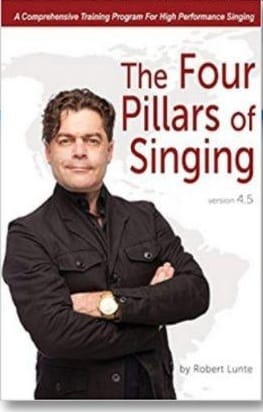
Robert Lunte's book is the anchor text for The Vocalist Studio method, and it's built for exactly the singer that classical pedagogy texts tend to leave out: someone singing rock, metal, pop, or contemporary styles who wants power and range without wrecking their voice. The framework organizes vocal training around four areas: respiration, vibration, resonation, and visualization, and the book runs over 600 pages with training routines, illustrations, and anatomy diagrams.
What genuinely sets it apart from most books in this space is that it isn't only a book. It's the written component of a full program with video demonstrations of every exercise, which solves the oldest problem in singing books: you can read a description of an exercise and still have no idea whether you're doing it right. Reviewers consistently mention the same specific techniques as the ones that unlocked something for them, particularly the octave sirens for approaching high notes without fear and the vowel modification work.
Honest caveats worth knowing. Multiple reviewers, including favorable ones, note that Lunte uses a lot of proprietary terminology, and that people just starting out sometimes find the volume of technical vocabulary hard to absorb. More than one review suggests it suits intermediate singers rather than absolute beginners. One reviewer who bought the full program also described a clunky content-sync process on setup. If you're an analytical learner who wants to understand the mechanism, this is a strong fit. If you want something gentle, start elsewhere and come back to it.
Learn more about The Four Pillars of Singing
If you want the coached version of the same method rather than self-study, our guide to the best online singing lessons covers The Vocalist Studio alongside the other major programs.
The Contemporary Singer, Anne Peckham (Best Structured Starting Point)
Published through Berklee, Peckham's book is the most conventional "learn to sing properly" text on this list, and that's a compliment. It moves through breathing, posture, resonance, range, and style in a sequence that makes sense, with online audio so you can hear the exercises rather than guess at them. It's built for beginners through advanced singers and doesn't assume you already know musical terminology.
If you want one book that will take you from "I sing in the car" to "I understand what I'm doing," this is the safest single purchase on this page.
What Every Singer Needs to Know About the Body (Best First Book on Anatomy)
This is the book experienced singers recommend to people who want to understand the physical instrument but aren't ready for a pedagogy textbook. It uses Body Mapping, an approach focused on correcting the inaccurate mental picture most people have of where their ribs, lungs, and larynx actually are and how they move. That sounds abstract until you realize how many breathing problems come from singers trying to expand a part of their body that doesn't work the way they imagine.
A Goodreads reviewer discussing Richard Miller's dense text specifically recommended this one for absolute beginners in vocal pedagogy, as the step before McCoy and Miller. That's a good description of its role.
Complete Vocal Technique, Cathrine Sadolin (Best for Style Range)
Sadolin's system is widely used across Europe and is built around four vocal "modes" that map onto different sound qualities, from soft and breathy through full-out belting and distortion. The appeal for contemporary singers is that it treats gritty, distorted, and extreme sounds as trainable techniques rather than as damage waiting to happen, and gives a framework for producing them deliberately.
Worth knowing: CVT is a system with its own vocabulary and certified instructor network, so the book works best if you're willing to commit to its framework rather than cherry-pick from it.
Check current prices on Amazon - German Edition - French Edition
Books for Voice Teachers and Serious Students
Your Voice: An Inside View, Scott McCoy (Best Modern Pedagogy Text)
If you're going to own one voice pedagogy book, most working teachers would point to his one first. McCoy covers anatomy, acoustics, and the physiology of phonation, and does the hard work of translating research-level material into language a musician can actually use. It's a standard text in undergraduate and graduate pedagogy programs, and it includes multimedia material with acoustic and visual examples rather than relying on static diagrams alone.
Fair warning shared by reviewers who like it: you still have to be willing to navigate anatomical diagrams and Latin terminology. McCoy makes it as approachable as this material gets, but it doesn't become easy.
The Structure of Singing, Richard Miller (The Landmark Text)
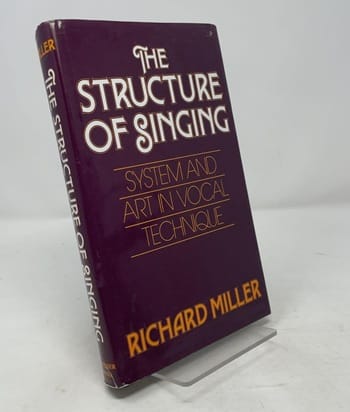
This is the book that shows up on nearly every voice pedagogy reading list, including the National Association of Teachers of Singing recommended lists. Miller applies findings from medicine, acoustics, phonetics, and speech therapy to demonstrate the scientific basis behind traditional exercises and vocalises, covering onset, breath management, agility, resonance, vowel modification, register unification, and vibrato across roughly 400 pages.
It is not a beginner's book and was never meant to be. Buy it when you're ready to work through it slowly, and see the pricing note further down this page before you order.
Solutions for Singers, Richard Miller (Best Miller to Start With)
Miller's later book answers over 200 specific questions raised in his master classes and pedagogy courses, in a straightforward question-and-answer format. Instead of building a systematic theory, it addresses concrete recurring problems: exercises for tongue tension, how breathing instruction should differ for younger versus older students, and similar practical questions teachers actually face.
Reviewers who found The Structure of Singing heavy going frequently describe this one as more digestible while covering much of the same expertise. If you want Miller and you're not sure you're ready for the textbook, start here.
The Diagnosis and Correction of Vocal Faults, James McKinney (Best Problem-Solving Manual)
A compact, practical manual organized around the thing teachers actually do all day: hearing a problem and figuring out what's causing it. It gives specific exercises for specific technical faults and lays out a process for diagnosis rather than a general theory of voice. Frequently recommended as a new voice teacher's first reference book because it's immediately usable.
The Vocal Athlete, Wendy LeBorgne and Marci Rosenberg (Best for Contemporary Voice Users)
Written by a speech-language pathologist and a voice specialist, this one treats contemporary commercial music singers as athletes and covers training load, vocal health, injury prevention, and the specific demands of belting and hybrid styles. It's the text to reach for if you work with singers doing musical theatre, pop, or rock rather than classical repertoire, and it's genuinely useful reading if you're a singer navigating medical care for your own voice.
Pairs naturally with our Vocal Health and Maintenance guide, which covers the day-to-day habits side of the same subject.
The Functional Unity of the Singing Voice, Barbara Doscher
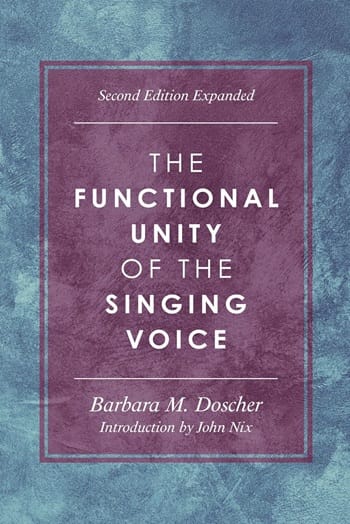
Doscher's contribution is treating breathing, phonation, resonance, and articulation as a single integrated system rather than four separate topics, which is closer to how the voice actually behaves. Includes anatomical illustration and acoustics coverage. A standard pedagogy reference that appears on most professional reading lists.
Books on the Artistic and Mental Side
The Naked Voice, W. Stephen Smith (Best for Singers Who Are Technically Stuck)
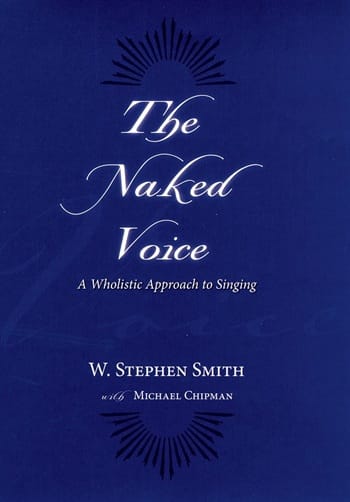
Smith's book addresses something most technique books avoid: the psychological and emotional dimension of singing, and how mental interference shows up as physical tension. It combines technical instruction with attention to the internal state of the performer. Voice teachers who love this book tend to love it emphatically, and it fills a real gap for singers who have solid technique on paper but freeze or tighten when it matters.
On the Art of Singing, Richard Miller (Best Miller for Non-Teachers)
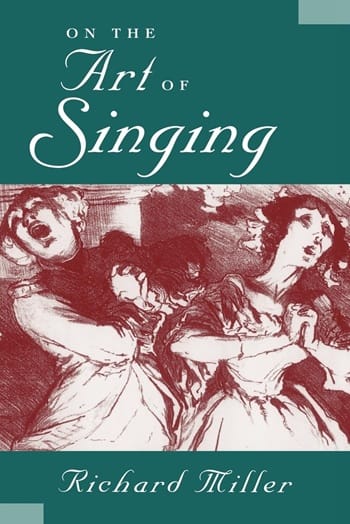
A collection of essays written in a deliberately non-technical style, covering vocal technique, style and interpretation, professional preparation, and pedagogy. The structure lets you read sections in any order based on what you actually care about. This is the Miller book to buy if you want his thinking without committing to a textbook.
The Deep End: Voice Science
These are research-level texts. They're on this list for completeness, and because a few people reading this genuinely want them.
The Science of the Singing Voice, Johan Sundberg. The foundational text on the acoustics and physiology of singing from a research perspective.
Principles of Voice Production, Ingo Titze. Titze is among the most cited researchers in voice science, and this is the technical reference. Expect physics.
Practical Vocal Acoustics, Kenneth Bozeman. Bozeman does the useful work of translating acoustic research into pedagogy that a teacher can apply in a lesson, making this the most accessible entry point of the three.
If you want the acoustics without the textbook commitment, the ear-training and theory side is covered more gently in our guide to music theory for singers.
A Note on Out-of-Print Prices
Worth knowing before you shop: several classic pedagogy texts have gone out of print, and used copies can be startlingly expensive. A Goodreads reviewer noted wanting a personal copy of The Structure of Singing but finding it out of print with very expensive used copies.
Three practical suggestions. Check whether a newer edition exists under a different publisher before paying collector prices for an old one, since some of these titles have moved houses over the decades. Check university library access if you have any affiliation, since these are standard course texts and widely held; and check the Internet Archive's lending library, which carries some of these titles for borrowing.
Frequently Asked Questions
Can you actually learn to sing from a book?
Partly. Books are excellent for understanding concepts, building a vocabulary for what you're experiencing, and giving you structured exercises to work on. What they can't do is hear you and tell you whether you're doing it correctly, which is the single biggest limitation of self-study. Books that include audio or video demonstrations close some of that gap. Pairing a book with even occasional lessons closes far more of it.
What is the best singing book for a complete beginner?
The Contemporary Singer by Anne Peckham is the most reliable structured starting point, and *What Every Singer Needs to Know About the Body* is the gentlest introduction to the physical side. Avoid starting with Richard Miller or Scott McCoy, not because they're bad, but because they were written for a different reader.
Is The Structure of Singing worth buying?
If you teach voice or you're studying pedagogy seriously, yes. It's one of the most influential texts in the field. If you're a singer looking to improve your technique, Miller's Solutions for Singers or On the Art of Singing will serve you better, and you can come back to The Structure of Singing later.
What books do voice teachers actually use?
Scott McCoy's Your Voice: An Inside View, Richard Miller's texts, James McKinney's The Diagnosis and Correction of Vocal Faults, Barbara Doscher's The Functional Unity of the Singing Voice, and The Vocal Athlete appear repeatedly on professional reading lists, including those published by the National Association of Teachers of Singing.
Are singing books better than apps or online courses?
They're different tools. Books explain concepts thoroughly and are worth returning to over years. Apps give you real-time pitch feedback that a book physically cannot. Courses give you video demonstrations and often some form of coaching. Most singers who make real progress use some combination. Our guide to the best vocal training apps covers the app side in detail.
Do I need a classical background to use these books?
For the pedagogy texts, some familiarity with musical terminology helps considerably, though most explain their terms. For the contemporary books, Lunte, Peckham, Sadolin, and The Vocal Athlete, no classical background is assumed, and the examples come from popular styles.
Final Picks
- Best for Contemporary and Rock Singers: The Four Pillars of Singing, Robert Lunte
- Best Structured Starting Point: The Contemporary Singer, Anne Peckham
- Best First Book on the Body: What Every Singer Needs to Know About the Body
- Best Modern Pedagogy Text: Your Voice: An Inside View, Scott McCoy
- Best Problem-Solving Manual for Teachers: The Diagnosis and Correction of Vocal Faults, James McKinney
- Best for Contemporary Voice Health: The Vocal Athlete, LeBorgne and Rosenberg
- Best for Singers Who Are Technically Stuck: The Naked Voice, W. Stephen Smith
- The Landmark Text: The Structure of Singing, Richard Miller
Buy for the reader you are right now, not the one you plan to become. The pedagogy texts will still be there in two years, and they'll make far more sense once you have some practical technique underneath you. Starting at the deep end is how good books end up abandoned on shelves.
Whichever you pick, a book works best alongside something that can actually hear you. Our guide to the best online singing lessons covers coached programs, and our Vocal Health and Maintenance guide covers keeping the instrument in shape while you train it.