
Affiliate Disclosure: This article contains affiliate links. If you purchase through one of these links, we may earn a commission at no extra cost to you.
The best budget studio monitors in 2026 are the Kali Audio LP-6 V2 for value, the Yamaha HS5 for honest mixing, and the KRK Rokit 5 G5 if you want built-in DSP room correction. Before you compare a single spec, you need to know one thing: nearly every monitor on this page is sold as a single speaker, not a pair. That means the price you see is half of what you'll actually spend, and it's the most common budget miscalculation first-time buyers make.
This guide gives you real prices with that doubling made explicit, explains why one feature matters far more than frequency response in a bedroom studio, and includes one monitor from our research list that we ended up recommending against. We'll also cover the costs nobody mentions until after you've bought the speakers. If you're hunting for the best affordable studio monitors rather than the cheapest ones, that distinction is where most of the useful decisions live.
The Sticker Price Trap
Here's what catches people. You read a roundup that says the Yamaha HS5 is around $200, you budget for $200, and you discover at checkout that $200 buys you one speaker. Stereo requires two. Your actual budget should be $400.
This is standard practice across the category, not a trick. Yamaha, KRK, JBL, Kali, ADAM, and Samson all sell studio monitors individually, and it exists for legitimate reasons: engineers building surround or Dolby Atmos setups need odd numbers of speakers, and people replace one blown monitor without buying a matched pair. Zzounds' own product pages label these clearly as "Single Speaker," and the Samson listing spells out "sold individually" right in the feature list.
But it means every price in every studio monitor article needs mental doubling, and many articles quietly quote single-speaker prices next to phrases like "under $300" without clarifying what they mean. A few products genuinely do ship as bonded pairs, typically the smallest desktop models, but none of the eight monitors in this guide are among them.
So throughout this article, every price is stated per speaker with the pair cost alongside it. Budget accordingly.
What Actually Matters in a Budget Monitor
Frequency response charts get all the attention. For someone mixing in an untreated bedroom, they matter less than you'd think.
Boundary EQ or acoustic space controls. This is the single most valuable feature in a budget monitor, and here's why. A monitor's published frequency response is measured in an anechoic chamber. Your desk is against a wall, your speakers are probably sitting on the desk surface, and there's a corner nearby. All of that adds low-end buildup that can swamp a mix by several decibels. Boundary EQ switches let you compensate for exactly that: on a desk, near a wall, in a corner, on stands in free space. It's the cheapest acoustic treatment you'll ever buy, and it's built into the speaker.
Front-firing versus rear-firing ports. A rear-ported monitor pushed close to a wall gets boomy, because the port needs breathing room. A front-ported design is far more forgiving of tight placement, which describes most bedroom setups. Kali's LP series is front-ported. The Yamaha HS series is rear-ported.
Woofer size relative to your room. Bigger woofers move more air and reach lower, but an 8-inch monitor in a small untreated room often creates more low-end problems than it solves. For rooms under roughly 150 square feet, a 5-inch or 6.5-inch monitor is usually the smarter choice, and you'll fight your room less.
Input types. Look for balanced XLR or TRS inputs rather than RCA only. Balanced connections reject noise over the cable run, which matters if your interface sits more than a couple of feet away. Our XLR cable guide covers the connection side.
Honest tuning versus flattering tuning. Some budget monitors are voiced with hyped bass and bright highs because it sounds impressive in a showroom. That's actively counterproductive for mixing, since you'll under-mix bass and over-mix treble to compensate, and your tracks will sound wrong everywhere else. A monitor that sounds slightly boring is usually doing its job.
Sound On Sound's studio monitoring and acoustics coverage is worth reading if you want to go deeper on room behavior, which will affect your results more than any single speaker choice at this price point.
Quick Comparison Table
All prices are per single speaker. Double for a stereo pair.
| Monitor | Per Speaker | Per Pair | Woofer | Best For |
|---|---|---|---|---|
| Kali Audio LP-6 V2 | $249.00 | $500 est. | 6.5" | Best overall value |
| Yamaha HS5 | $199.99 | $400 est. | 5" | Honest mixing reference |
| KRK Rokit 5 G5 | $199.00 | $400 est. | 5" | DSP voicing modes |
| JBL 308P MKII | $242.95 | $486 est. | 8" | Widest sweet spot |
| Kali Audio LP-8 V2 | $299.00 | $600 est. | 8" | Bigger rooms, more low end |
| Focal Alpha 50 EVO | $379.00 | $760 est. | 5" | French build, neutral voicing |
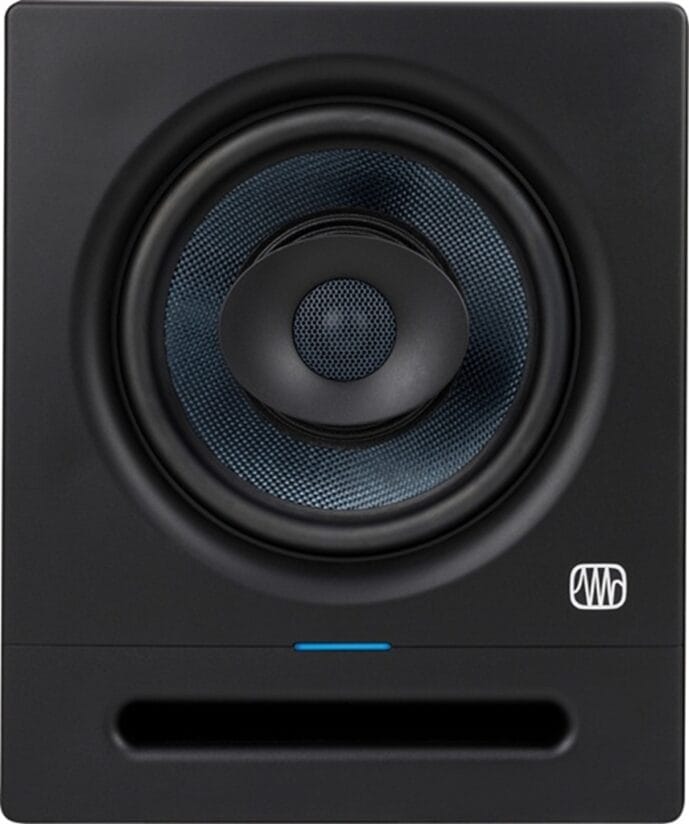
| PreSonus Eris Pro 8 | $299.99 | $600 est. | 8" coaxial | Coaxial imaging, Atmos-ready |
| Samson Resolv SE8 | $279.99 | $560 est. | 8" | See our honest assessment below |
Check current pricing, since these move with sales and clearance cycles.
Best $200 or Under Per Speaker
1. Yamaha HS5 (Best Honest Mixing Reference)
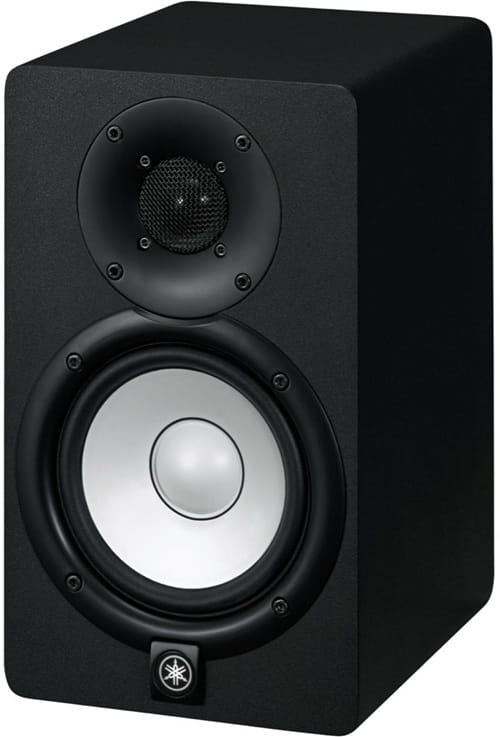
Price: Around $200 per speaker
Woofer: 5-inch
The HS5 is the descendant of the Yamaha NS-10, the white-coned speaker that sat on top of nearly every major studio console for two decades. Engineers used the NS-10 specifically because it was unforgiving. Anything mixed to sound good on one translated reliably to consumer speakers, because the monitor refused to flatter you.
The HS5 inherits that philosophy. It is analytical, unsentimental, and slightly boring to listen to for pleasure, which is exactly the point. If your mix sounds good on HS5s, it will probably sound good elsewhere. It includes room control and high-trim switches, though fewer placement options than Kali or KRK.
What we love:
- The closest thing to an industry reference standard at this price
- Genuinely honest voicing that reveals problems rather than hiding them
- Enormous body of shared knowledge, since so many people mix on these
Watch out for:
- Rear-ported, so it needs breathing room from the wall behind it
- Unflattering by design; not fun for casual listening
- Costs meaningfully more than the Kali LP-6 V2 for a smaller woofer
Check the Latest Yamaha HS5 Price
2. KRK Rokit 5 G5 (Best DSP Room Correction)
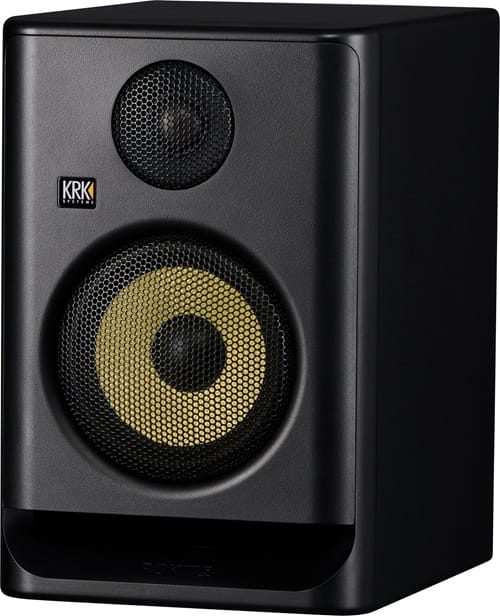
Price: Around $199 per speaker
Woofer: 5-inch Kevlar
The Rokit line's yellow woofers are the most recognizable thing in home studios, and the Generation 5 revision addressed the line's historic criticism directly. Older Rokits were known for hyped bass that flattered mixes rather than revealing them. G5 adds onboard DSP with three voicing modes: Mix mode with flat frequency and phase response for critical work, Create mode with a more inspirational voicing for writing and producing, and Focus mode with a midrange emphasis for scrutinizing the band where vocals live.
It also includes 25 boundary and tuning EQ combinations, and a free KRK app that walks you through setup in your specific room. For a first-time buyer with no acoustic treatment and no experience positioning speakers, that guided setup has real practical value.
A longtime KRK reviewer who also owns a pair of $1,700 Dynaudio BM6As offered a measured comparison: the sound is great for the money, the bass is impressive for the cabinet size, the frequency response is surprisingly good, and while the imaging doesn't match his JBLs, the tweeters are actually smoother.
What we love:
- Three DSP voicing modes genuinely serve different tasks
- 25 boundary EQ combinations plus app-guided room setup
- Front-ported, forgiving of tight placement
- Mix mode addresses the old Rokit criticism head-on
Watch out for:
- Create mode is deliberately hyped; use Mix mode for anything you plan to release
- 5-inch woofer means limited low-end extension without a subwoofer
- The voicing modes add a decision you have to keep making
Check the Latest KRK Rokit 5 G5 Price
Best $200 to $300 Per Speaker
3. Kali Audio LP-6 V2 (Best Overall Value)
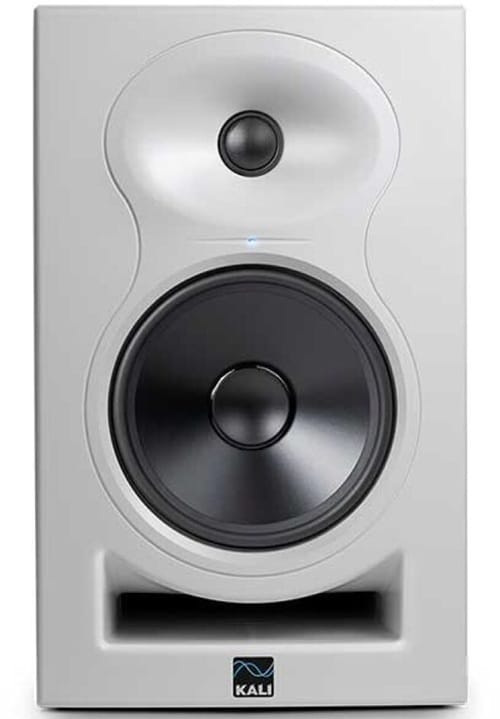
Price: Around $249 per speaker
Woofer: 6.5-inch paper cone
Kali was founded by former JBL engineers, and the LP-6 has been the value benchmark in this category since it launched. The V2 revision added updated boundary EQ settings and a lower-noise amplifier platform. You get a 6.5-inch woofer at a price where competitors give you 5 inches, front porting that tolerates wall-adjacent placement, and the most comprehensive boundary EQ dip switches in this price bracket.
The verified buyer feedback on this one is unusually specific and worth quoting at length. One reviewer with 28 years of playing and 20 years in recording described the stock low end as noticeably hyped compared to his Focal CMS 65s, then explained that the -2dB low trim reduced it greatly and made the speaker feel more realistic, and that a +2dB high shelf opened up the presence. His summary: upper mids lively with good separation, low end genuinely good once tamed, and the only weak spot a slightly scooped lower midrange. That's a far more useful assessment than any spec sheet, and note that both fixes came from controls built into the speaker.
Another verified buyer put the value case bluntly, saying they beat anything else he'd heard dollar for dollar, outclass any KRK he'd tried, and are roughly a push against comparable Yamahas and JBLs while costing less than half what the similarly sized Yamaha does.
What we love:
- Largest woofer at this price, 6.5 inches where rivals give you 5
- Best-in-class boundary EQ for compensating for real-world placement
- Front-ported, so it works pushed near a wall
- Genuinely strong verified buyer feedback with specific technical detail
Watch out for:
- Stock low end runs hot; plan on using the -2dB trim, which is what the controls are for
- Slightly scooped lower midrange according to one detailed reviewer
- The flattering low-mid character makes it marginally better for finishing mixes than for diagnosing problems in them
Check the Latest Kali LP-6 V2 Price
4. JBL 308P MKII (Best Sweet Spot)
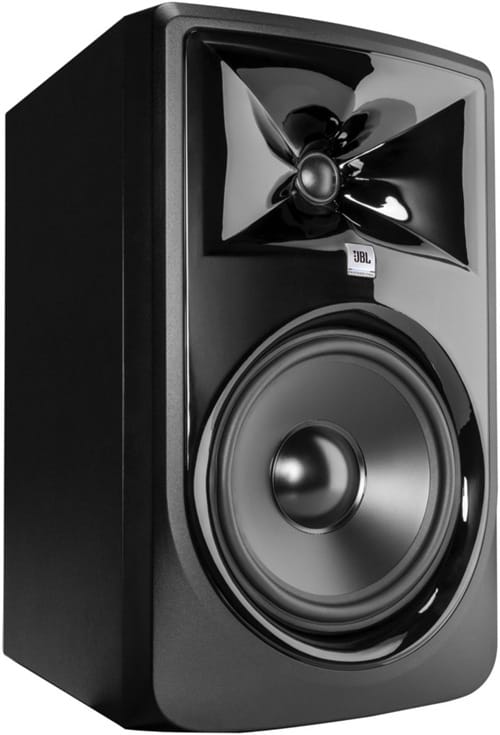
Price: Around $242 per speaker
Woofer: 8-inch
JBL's Image Control Waveguide is the headline feature, and it delivers a notably wide sweet spot, meaning your mix doesn't fall apart when you lean back or shift in your chair. That matters more than it sounds if you don't have a rigidly fixed listening position. The 8-inch long-throw woofer with JBL's Slip Stream port gives real low-frequency extension, and the MkII revision added Boundary EQ to attenuate the bass buildup that happens when monitors sit on a desk or near walls, plus a 3-position HF trim.
Connectivity is genuinely professional: balanced XLR and 1/4-inch TRS inputs with adjustable input sensitivity.
What we love:
- Widest sweet spot in this group thanks to the waveguide design
- Real 8-inch low-end extension with a front port
- Boundary EQ and HF trim for room compensation
- Dual custom Class D amps, one per transducer
Watch out for:
- An 8-inch woofer in a small untreated room can create more bass problems than it solves
- Larger cabinet needs more desk or stand space
- Consider the 6-inch 306P MkII instead if your room is small
Check the Latest JBL 308P MKII Price
5. Kali Audio LP-8 V2 (Best for Bigger Rooms)
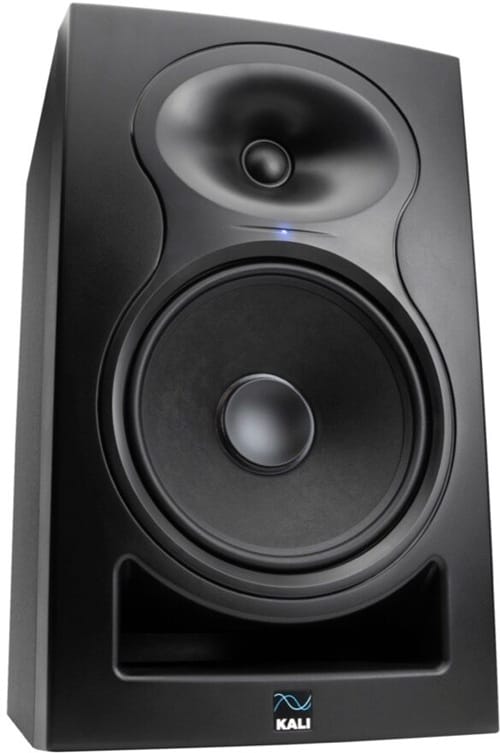
Price: Around $299 per speaker
Woofer: 8-inch
The LP-6's larger sibling, with the same V2 improvements: lower-noise amp platform and updated boundary EQ settings. Everything that makes the LP-6 a value standout applies here, scaled up for rooms that can actually handle an 8-inch woofer. One verified LP-6 buyer specifically noted that the 8-inch version matches the price of JBL's 8-inch model and speculated the comparison would be close.
Worth being honest about the sizing question: an 8-inch monitor only makes sense if you have the room for it. If you're in a bedroom with the desk against a wall, the LP-6 V2 will likely serve you better and cost less.
What we love:
- Same excellent boundary EQ and front-porting as the LP-6
- Genuine 8-inch low-end extension at a competitive price
- V2 lower-noise amplifier
Watch out for:
- Genuinely too much speaker for a small untreated room
- Meaningfully larger and heavier than the LP-6
Check the Latest Kali Audio LP-8 V2 Price
6. PreSonus Eris Pro 8 (Best Imaging, Atmos-Ready)
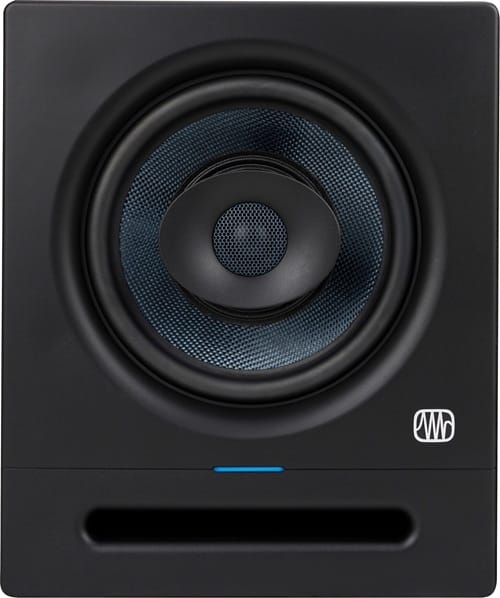
Price: Around $300 per speaker
Woofer: 8-inch woven composite, coaxial
The Eris Pro 8 is the technical outlier here. It uses a coaxial design, mounting the 1.25-inch silk-dome tweeter concentrically within the 8-inch woofer, creating a single acoustic point source. The practical benefit is superior phase alignment between drivers and a genuinely wide, stable sweet spot with symmetrical dispersion, which is why PreSonus positions it for immersive Dolby Atmos rooms as well as stereo work.
It also offers the most thorough tuning controls in this guide: 3-position Acoustic Space, continuously variable HF and Mid controls at plus or minus 6dB, and a switchable low cut at 80Hz or 100Hz. 140W of Class AB amplification, 35kHz-20kHz response, and provisions for wall and ceiling mounting.
Being straight about the category framing: at roughly $600 a pair, this is stretching the definition of budget. It's here because coaxial designs typically cost considerably more, and because if you're planning multi-channel or Atmos work later, the point-source design and mounting provisions matter.
What we love:
- Coaxial point-source design usually found at much higher prices
- Most comprehensive tuning controls in this guide, including variable mid control
- Genuinely suited to immersive and multi-channel setups
- Wall and ceiling mount provisions
Watch out for:
- The most expensive option here at roughly $600 a pair
- 8-inch woofer, so the same small-room caution applies
- More tuning controls means more ways to get it wrong
Check the Latest PreSonus Eris Pro 8 Price
Our Highest Priced Budget Monitor
7. Focal Alpha 50 EVO (Best Neutral European Voicing)
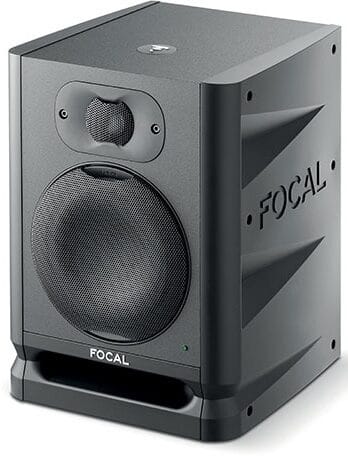
Price: Around $379 per speaker
Woofer: 5-inch Slatefiber
Focal is a French manufacturer with a serious reputation at higher price points, and the Alpha EVO line is their entry tier. The EVO revision upgraded the driver to a Slatefiber cone, made from recycled carbon fiber, for greater accuracy and wider dispersion. The voicing is neutral in the European monitoring tradition, closer to the Yamaha philosophy than the KRK one.
At the time of writing, this model appears in Zzounds' clearance section, which is worth checking out for a budget-focused buyer, since clearance pricing on a Focal can put genuinely premium engineering into this price bracket.
What we love:
- Focal build quality and driver engineering at an entry price
- Neutral, accurate voicing suited to mix decisions
- Front-ported
- Often discounted in clearance, which is where the real value appears
Watch out for:
- Full price puts it above better-value options like the Kali LP-6 V2
- 5-inch woofer at a price where you could get 8 inches elsewhere
- Clearance availability comes and goes
Check the Latest Focal Alpha 50 EVO Price
Honorable Mention
Samson Resolv SE8
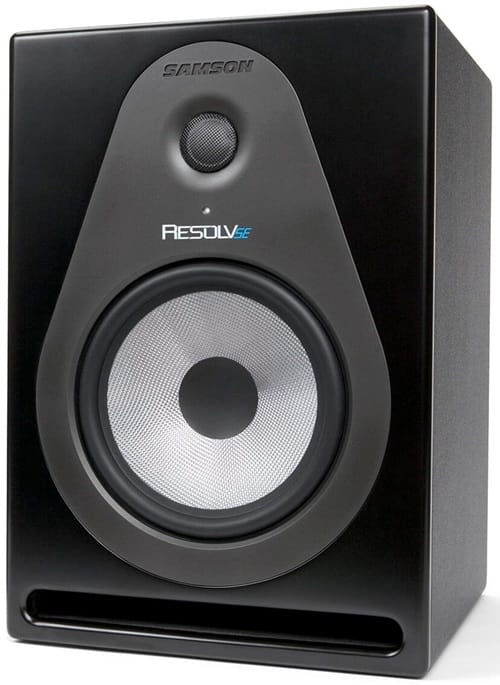
Price: $279.99 per speaker
This one was also on our research list; it is genuinely listed and purchasable on Zzounds.
On paper, it's reasonable: an 8-inch woven carbon fiber woofer, 1.25-inch soft dome tweeter, 100 watts, 40Hz to 27kHz, a 4-position HF lift control, and front-slotted ports.
The Zzounds listing has no customer ratings at all, which is unusual for a monitor in this price range and gives you nothing to go on.
Check the Latest Samson Resolv SE8 Price
The Hidden Costs Nobody Mentions
Your monitor budget isn't just the speakers. Plan for these.
A second speaker. Covered above, but it bears repeating since it's half your cost.
Monitor stands or isolation pads. Speakers sitting directly on a desk transmit vibration into the surface, which muddies the low end and blurs detail. Isolation pads run $30 to $60 a pair and are the highest-value accessory purchase you'll make. Proper stands cost more but fully decouple and let you set tweeter height at ear level, which genuinely matters.
Balanced cables. Monitors don't ship with them. You need two TRS or XLR cables from your interface to your speakers. Budget $30 to $60 for a decent pair, and see our XLR cable guide for options.
An audio interface with balanced outputs. Monitors need line-level balanced outputs, which means an interface rather than your computer's headphone jack. If you don't have one yet, our audio interface guide covers current options.
Basic acoustic treatment, eventually. Two absorption panels at your first reflection points will improve what you hear more than upgrading from $300 monitors to $600 ones. Genuinely. If your budget is tight, buy cheaper monitors and treat the room.
Realistically, budget roughly 40 percent above the pair price of the speakers to have a functional monitoring setup.
Monitors or Headphones First?
If you can only buy one, and you're primarily recording and mixing vocals, closed-back headphones are often the smarter first purchase.
The reason is specific. Monitors are only as good as the room they're in, and an untreated bedroom will lie to you about your low end no matter which speakers you buy. Headphones bypass the room entirely. They're also essential for tracking vocals, since a microphone will pick up sound from open speakers, making them unusable while recording.
The honest workflow for most home studios is headphones for tracking and detailed editing, monitors for perspective and mix decisions, and reference checks on both. Our headphones guide covers that side, including why closed-back matters specifically for vocal recording.
For the full picture on building out a recording setup, our Recording and Music Production guide maps out how the pieces fit together, and the DAW guide covers the software side.
Frequently Asked Questions
Are studio monitors sold in pairs or individually?
Nearly all of them are sold individually. Yamaha, KRK, JBL, Kali, and Samson all sell single speakers, and the price quoted is typically for one. A few very small desktop models ship as bonded stereo pairs, but none of the monitors in this guide do. Always confirm before ordering, and double the price when budgeting.
What are the best budget studio monitors overall?
The Kali Audio LP-6 V2 at roughly $300 a pair offers the strongest value, with a larger 6.5-inch woofer than similarly priced rivals and the best boundary EQ in its class. The Yamaha HS5 is the pick if you want the most honest, industry-standard reference voicing, and the KRK Rokit 5 G5 is best if you want DSP voicing modes and app-guided room setup.
Do I need 8-inch monitors?
Probably not, if your room is small. An 8-inch woofer in an untreated bedroom often generates more low-end problems than it solves, because the room can't handle the energy. For spaces under roughly 150 square feet, a 5-inch or 6.5-inch monitor will usually give you more accurate results.
What does boundary EQ actually do?
It compensates for the low-frequency buildup caused by speaker placement. Published frequency response is measured in ideal conditions, but a speaker on a desk near a wall or in a corner produces significantly more bass than that measurement suggests. Boundary EQ switches attenuate that buildup so you hear something closer to reality. It's the most useful feature in a budget monitor.
Are cheap studio monitors good enough for real mixing?
Yes, with a caveat. Affordable studio monitors in the $300 to $500 per pair range are genuinely capable, and plenty of released music has been mixed on them. The limiting factor is almost always the room, not the speakers. Two absorption panels plus $300 monitors will beat $700 monitors in an untreated room.
Should I buy monitors or a subwoofer first?
Monitors, always. A subwoofer in a small untreated room usually makes low-end decisions harder rather than easier, since you're adding energy to a space that already can't reproduce bass accurately. Get monitors sized appropriately for your room, treat the room, and revisit the subwoofer question later.
Why do my mixes sound different everywhere else?
Almost always the room, not the monitors. Untreated rooms create peaks and nulls that make you compensate incorrectly, and those compensations show up as problems on other systems. Boundary EQ helps, isolation pads help, absorption panels help most. Cross-checking on headphones and consumer earbuds is also standard practice for exactly this reason.
Final Picks
All prices per speaker, with pair cost in parentheses.
- Best Overall Value: Kali Audio LP-6 V2
- Best Honest Mixing Reference: Yamaha HS5
- Best DSP Room Correction: KRK Rokit 5 G5
- Best Sweet Spot: JBL 308P MKII
- Best for Bigger Rooms: Kali Audio LP-8 V2
- Best Neutral Voicing: Focal Alpha 50 EVO
- Best Imaging and Atmos-Ready: PreSonus Eris Pro 8
- Honorable Mention: Samson Resolv SE8
If you take one thing from this article, make it this: double the sticker price, spend what's left on isolation pads and a couple of absorption panels rather than a nicer speaker. At this budget, the room is the limiting factor, not the monitors.
For everything else in a home recording setup, our Singing Equipment Reviews pillar guide covers the full picture.